Mapping headlines or brief summaries

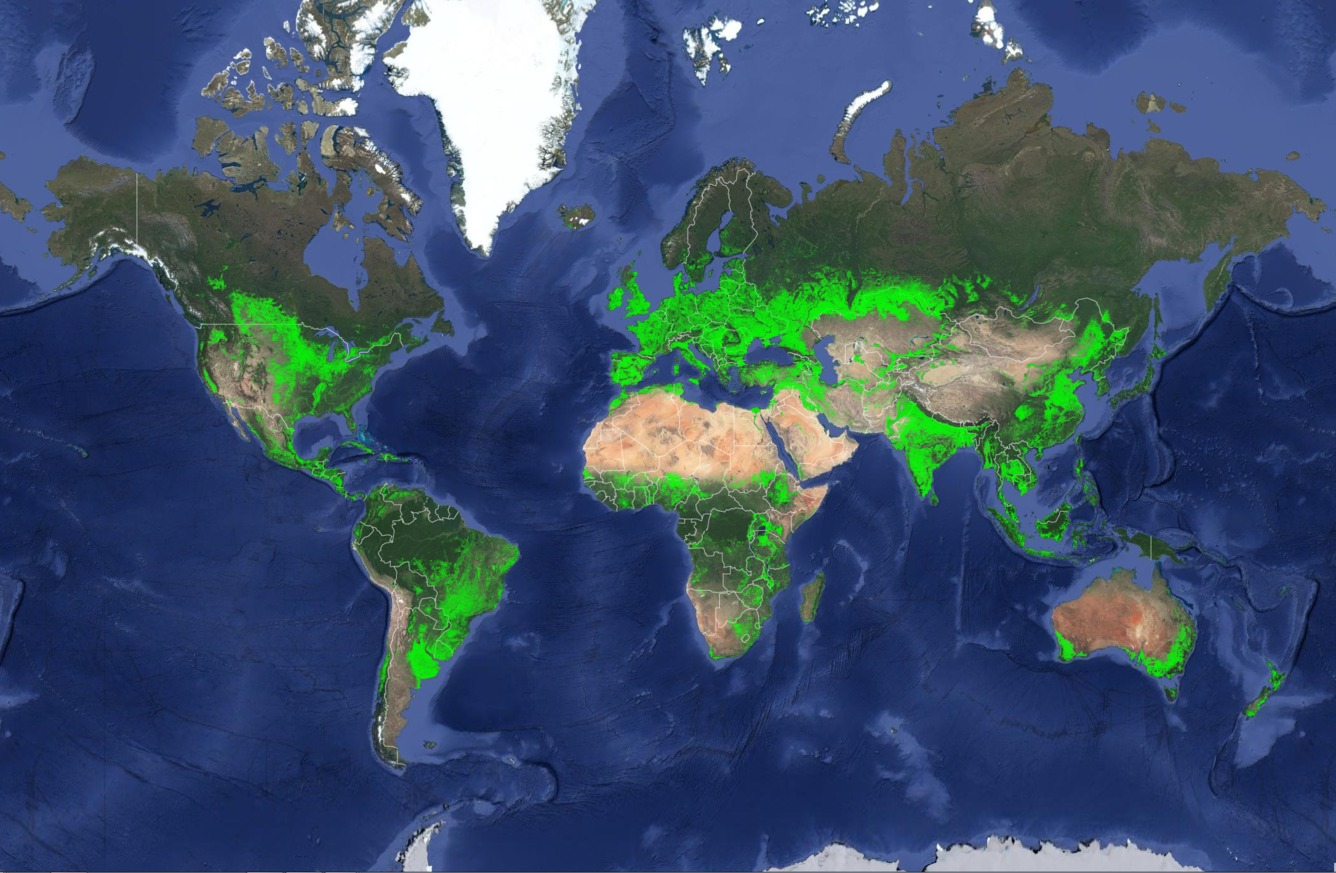
Now and into the future, people need context to understand occurrences in our world.  As I mentioned a long time ago, there would be an advantage to mapping out headlines or brief summaries on online maps. When coupled with data layers, people can learn to understand relationships and the context of observations, patterns, and hypotheses.   

In our increasingly interconnected yet often fragmented world, the challenge of truly comprehending global occurrences has never been more critical. We are awash in information, yet frequently lack the essential context to discern meaningful patterns and underlying connections.

I’ve long advocated for a transformative approach to this issue: the development of dynamic, geo-spatial intelligence platforms. Imagine a system where concise summaries of breaking news, research findings, and various data points are not merely presented as isolated facts, but are instead overlaid onto interactive digital maps.

This goes beyond simple visualization. By integrating diverse data layers—be they environmental, demographic, economic, or social—users could actively explore and identify profound relationships. This synergistic approach would empower individuals to move from passive observation to sophisticated analysis, enabling them to construct informed hypotheses, validate emerging patterns, and truly grasp the multi-faceted nature of events. Such a platform would serve as an invaluable tool for critical thinking, fostering a deeper, more nuanced understanding of the complex forces shaping our present and future.

Sharing “be-aware” wisdom

In the future, people may help one another and be mindful of essential things in a concept I call be aware.    It is part of the We-Me Explorers cycle, functioning by working systematically with the Internet and other information-distribution technologies.   Moreover, it is spatial because it uses coordinates on a map to indicate your location.  In Essance, everyone on earth becomes a contributor to everyone else in a cycle.  It is about each of us and all of us, everyone, everything, everyone on earth as a cycle.   Being aware is a preventative approach to living on Earth. It is a holistic way of living on earth.   Instead of reacting to problems after they happen, being aware helps you in a holistic, preventive way.  For example, I just came across a website that says that if you go outside in the current weather, it takes 10 minutes to freeze your skin and get frostbite.   This is the type of information I’m talking about.   It is better to prevent negative energy things from occurring in your life than to respond to them after they happen.   Being aware can be a layer in itself, all over the world, as people constantly interact with it.   It is not only negative information, but it is also positive information.  For example, people can be made aware of great restaurants, Great places to ski, great places to skate, great places to meet people, and anything else imaginable.  In essence, being aware kind of makes everybody a reporter, or, as I would like to contribute, an Earth research explorer.  Nobody does it better than each of us and all of us together. World Without End…

I’m excited to share an evolving vision for a profoundly connected global community, one where mutual assistance and collective intelligence become cornerstones of our existence.

Imagine a world fundamentally reshaped by proactive awareness – a “Be Aware” ethos that empowers every individual to contribute to and benefit from a shared, living tapestry of global insight. This isn’t just about information; it’s about cultivating a holistic, preventative approach to life on Earth. Rather than reacting to challenges after they arise, we aim to anticipate and navigate them collaboratively.

This concept is underpinned by the “We-Me Explorers” framework, systematically leveraging the full potential of the Internet and advanced information-distributing technologies. Crucially, it incorporates a spatial dimension, allowing for the precise mapping and contextualization of data, offering a real-time understanding of our surroundings.

The essence of this paradigm is simple yet transformative: every person on Earth becomes an active contributor to the well-being and knowledge of everyone else. This cycle of shared insight is designed to operate on a continuous loop, benefiting ‘each of us and all of us’ in equal measure.

Consider the profound impact: critical safety alerts, like immediate environmental hazard warnings, could prevent countless harms. Yet, the scope extends far beyond prevention. This collective intelligence would also illuminate a wealth of positive opportunities – from uncovering exceptional dining experiences and prime recreational spots to facilitating new connections and fostering a deeper appreciation for our world’s offerings.

In this model, every individual organically evolves into an “Earth Research Explorer” – a vital reporter on the ground. Nobody can better understand and communicate the nuances of their immediate environment than the people living within it. Their observations, insights, and discoveries collectively weave into a dynamic, global understanding.

This vision is not merely about accumulating data; it’s about fostering a profound interconnectedness, driving continuous improvement, and creating a sustainable, thriving future for all. It’s a journey towards a world where collective foresight and shared wisdom lead us forward, endlessly.

Richard Thomas Simmons

An industrial earth, kings, castles, and kingdoms, using the logical mind manufacturing facility to blemish people

I’m more convinced than ever that political industrial machines are behind the blemishing of individual people.   In fact, I believe that Epstein Island may have been a primary industrial machine to tarnish the reputations of those involved.   This was done to silence those people involved.   The industrial machine manufacturing facility impacts people everywhere, especially if you have some credibility or relevance in our world.  The same type of manufacturing machine exists for celebrities as well.   Manufacturing dirt and relationship problems impact those people involved.   In many ways, I believe there is a domestic abuse manufacturing machine, somehow created by illicit drugs or alcohol excesses.   These manufacturing machines may not be direct but may be involved in indirect Manufacturing of conditions.  In fact, as a microcosmic indicator species approach, I believe that there’s a sin manufacturing machine, as it’s my house in Vermont, which may have been contaminated by some extreme drug that altered my behavior.   This microcosmic indicator species approach proves that there’s some industrial machine manufacturing, sin, crime, domestic abuse, and other so-called news-worthy events.   Moreover, I believe there’s some intrusive behavior alteration that occurs in some people.   I think the people most affected are those who can threaten the traditional ways of industrial manufacturing, or the Kings, castles, and kingdoms of the past, present, and future.   In other words, they have knowledge, history, ancestry, or some threat to the existing status quo.   

Consequently, it is possible that crime, violence, homelessness, and excessive sinning can come from some extreme industrial facility manufacturing Behavioral alteration.  Sometimes it may be stress and the cumulative survival-zone suffering of the manufacturing facilitywe’ve created here on earth.   However, I believe there are some more direct manufacturing conditions at times.   We must stop the manufacturing facility and the planet Earth industrial machine that manufactures mind-oriented logic, designed to win at any cost.

I am increasingly convinced that powerful, often unseen, systemic forces shape the trajectory of individual lives and societal narratives. My observations lead me to believe that behind the veneer of individual actions, there lies a sophisticated mechanism designed to influence and control outcomes.

Indeed, I perceive certain high-profile controversies, such as the Epstein Island saga, not merely as isolated incidents of misconduct, but as strategic operations designed to compromise, discredit, and ultimately neutralize influential individuals. These pervasive influences extend their reach across all sectors, particularly targeting those with significant credibility or societal relevance, including public figures and celebrities. They appear adept at cultivating environments ripe with scandal, interpersonal strife, and reputational damage.

Furthermore, I contend that even seemingly personal crises, such as domestic discord or struggles with substance abuse, can be subtly exacerbated or indirectly engineered by these overarching conditions, rather than being purely organic occurrences. From a deeply personal perspective, serving as a “microcosmic indicator,” I have even pondered whether certain alterations in my own perceptions or behaviors might stem from subtle, external influences rather than purely internal factors. This leads me to consider the possibility that environments are cultivated, perhaps through indirect means, that systematically encourage societal ills such as moral transgression, criminal activity, and various forms of abuse, often shaping the very fabric of what becomes “newsworthy.”

My observations suggest the existence of intrusive mechanisms designed to alter individual behavior, particularly targeting those perceived as threats to established power structures—be they entrenched industrial paradigms or the enduring legacies of historical dominance. These individuals often possess unique knowledge, historical insight, or ancestral connections that inherently challenge the prevailing status quo.

Thus, the proliferation of crime, violence, homelessness, and pervasive moral decay might not solely be products of individual failing or generalized societal stress, but rather, in part, stem from orchestrated conditions designed to induce specific behavioral alterations. It is imperative that we recognize and dismantle these pervasive, often hidden, systems that propagate a zero-sum, “win-at-all-costs” mentality, a manufactured logic that ultimately compromises our collective humanity.

Richard Thomas Simmons

Information overload

The contemporary information landscape, once a wellspring of insight, now often feels more akin to an overwhelming deluge. We find ourselves awash in a torrent of data, making it increasingly difficult to discern the signal from the noise, leading to cognitive overload rather than genuine understanding.

My steadfast belief, a perspective I have championed for quite some time, is that our path forward lies in a disciplined approach to information synthesis. We must move beyond merely presenting raw data and instead focus on transforming it into digestible information, which then, through careful aggregation and contextualization, evolves into truly cumulative knowledge. This transformation is not automatic; it requires deliberate effort.

Central to this effort is the pivotal role of content creators and writers. It is incumbent upon us to proactively craft information in a layered format. This begins with the creation of highly condensed, impactful entry points – whether they be meticulously designed headlines, executive summaries, or comprehensive abstracts. These brief outlines serve as essential navigational guides, allowing busy professionals and curious minds alike to quickly grasp the core message and relevance of any topic.

The beauty of this layered approach is its inherent flexibility. While these concise formats provide immediate clarity and efficiency, they are designed not to replace, but to complement, more extensive material. The option to ‘delve deeper’ into the full text remains paramount for those who require a thorough, nuanced understanding. This ensures that every individual can engage with information at the level of detail most suited to their current need and available time.

Embracing this methodology is crucial for fostering clarity, promoting efficient knowledge transfer, and ultimately, empowering better decision-making in our increasingly complex world.

Eliminate nuclear weapons on Earth and beyond

The nuclear weapons debate seems to illustrate the problem of reactionary reductionism.   Although it appears rational to eliminate all of the nuclear weapons on earth, there is always a reductionist argument to say that we need to keep them.   It is strange to let manufactured industrial Earth minds make poor decisions, an absence of hearts, rational Perspectives. I guess it’s how you read the book Hiroshima.   If you read the book from a manufactured, industrial Earth logic mind’s perspective, you read it one way; if you’re a rational heart person, you read it another way.   In many ways, it’s either a means or an end’s perspective.   It seems like a means perspective is a means to an end, and an end perspective is like aworld without end.  The latter condition is more of a sustainable, striving, desire-based feature condition, never-ending.   Consequently, I find it unbelievable that everyone didn’t make the same conclusion after reading the book Hiroshima, that we should never have employed the use of nuclear weapons, nor should we ever do it again.  It is an entirely irrational use of power for all ages, past, present, and future.   Holistically preventing war in the first place is the desired feature condition as far as I can tell.

The discourse surrounding nuclear armaments consistently brings to light a profound and unsettling paradox. While an intuitive, ethically grounded perspective would advocate for the complete eradication of these catastrophic weapons, a persistent, often narrowly defined ‘logic’ argues for their continued existence, typically framed as indispensable for national security. This divergence isn’t merely academic; it speaks to a fundamental split in how we approach global challenges and the very definition of progress.

One perspective, often characterized by a cold, utilitarian logic, prioritizes immediate strategic calculations and perceived deterrence over the profound and irreversible human cost. It views the world through a lens of power dynamics and risk management, sometimes at the expense of deeper moral considerations and long-term consequences. This approach, tragically, often allows for decisions that are deeply flawed when assessed against a broader humanitarian canvas. It is a mindset that compartmentalizes destructive capability, isolating it from its ultimate human impact.

Consider the historical narrative of Hiroshima. For some, it might be analyzed as a strategic necessity, a grim but effective tool to end a war. However, for those who approach history with a sense of empathy and a holistic understanding of human suffering, the events of Hiroshima serve as an unambiguous and enduring testament to the catastrophic irrationality of nuclear warfare. It underscores the intrinsic horror of deploying such weapons, revealing them not as mere instruments of policy, but as ultimate destroyers of life, culture, and future potential.

The critical distinction lies between viewing nuclear weapons as a ‘means’ to an end – a means that inherently condones unimaginable destruction – versus aspiring to an ‘end’ where such means are rendered obsolete, a world striving for enduring peace and mutual respect. The former path is fraught with perpetual danger, ethical compromise, and the ever-present threat of global annihilation. The latter, however challenging, represents a commitment to a sustainable future, a relentless pursuit of a world free from existential dread.

It is, therefore, astonishing that humanity has not universally coalesced around a singular, unequivocal conclusion: that the use of nuclear weapons is an unconscionable act, utterly indefensible in any era. Their existence, let alone their potential deployment, represents a complete abandonment of rational foresight and moral responsibility. The true ‘desired feature condition’ for global stability isn’t a precarious balance of terror, but rather a proactive and comprehensive commitment to preventing conflict at its roots, fostering cooperation, and embracing a shared vision of lasting peace.

Thoughts on manufacturing war with Thomas Jefferson

After reading a specific text, you can start a war by going back and circling the part of the document or the text that is a controversial stand.   Instead of looking at the entire document, people focus on the negative energy rather than the holistic positive energy.   Endless competition can occur if you’re never allowed to make your entire point without being impacted by factions that were created by the pen.   This endless controversy, conflict, competition, and chaos prevent us from moving beyond our current condition.   In many ways, one of the major wars has been ongoing for more than 200 years and involves Thomas Jefferson.  

The Declaration of Independence was an excellent document that articulated many of the desires people held in a natural-rights world.  However, the focus always seems to shift from the overall document to the castles depicted in the text.  For example, what comes to mind is some of his statements about the Native American Indians, and the concept that he was an Enslaver.  Thirdly, they focus on the fact that he had a child with one of his slaves.   They overlooked the overall positive energy that Thomas Jefferson was trying to pass along to the rest of us and focused on the negative energy, the popularity war, causing a kind of concept.   Without a doubt, public opinion from the rhetoric ruined Thomas Jefferson‘s declaration of independence so that the constitution, by reactionary reductions, manufactured Logic-minded people could take our country.  

Because Thomas Jefferson was so-called imperfect, he was not celebrated as much as he should have been.   In fact, his Legacy was ruined by reactionary, reductionist, and extreme competition from factions who drew circles around his text to start a war with him.   In a way, we need a Thomas Jefferson at the table these days because we are inundated with perspectives from extremely reactionary reductionism, industrial Earth, and Kings, castles, and kingdoms, respectively.  We must free ourselves from this tyranny so we can focus on our desired future here on earth.  I hypothesize that Thomas Jefferson was forced into a survival zone, suffering from a condition of extreme competition.  He eventually retired to nature and his small farm at Monticello.  Although I tried to summarize what I think happened in history, there are always those who say they can tell it better than I do, which makes me feel irrelevant.   Anyway, Isaiah Thomas suggests that you can always view things from a more reductionist perspective, as he focused on the dictionary as a political tool.   If you capture every word in history, you can always tell it better than me.   Therefore, if there’s any competition, you always win. I find it strange that you take care of me, but you never give me the things that you learn.   Therefore, I choose not to be part of your war; instead, I would be part of the Holistic enlightenment towards a desired future.

It is a pervasive human tendency to selectively isolate fragments of a larger narrative, especially when those fragments present a contentious or controversial aspect. Rather than engaging with the overarching spirit and constructive potential of a body of work or an individual’s legacy, discourse often devolves into an adversarial focus on perceived flaws or divisive elements. This reductionist approach cultivates an environment of perpetual contention, where factions, born from textual dissection, relentlessly challenge complete narratives.

Such an endless cycle of dispute, conflict, and chaos paralyzes our collective ability to transcend present challenges and envision a progressive future. Our societal condition stagnates when the focus invariably shifts from collaborative progress to competitive nitpicking, fueled by what amounts to intellectual warfare.

Nowhere is this phenomenon more acutely observed than in the historical appraisal of figures like Thomas Jefferson. While his Declaration of Independence stands as a foundational testament to fundamental human aspirations for natural rights, public discourse frequently bypasses its profound vision. Instead, it meticulously highlights specific perceived blemishes: his ownership of enslaved people, his complex personal life, or certain statements regarding Native American communities. This narrow lens, fueled by a “popularity war” mentality and reactive reductionism, overshadowed the immense positive impetus Jefferson sought to impart. His undeniable imperfections became weapons, used by competing factions to diminish his contributions and undermine the very ideals he championed, ultimately shaping a narrative that hindered his rightful celebration and distorted his legacy. His later retreat to Monticello, into a more contemplative existence, might even be viewed as a consequence of this intense, critical scrutiny.

In an era increasingly dominated by fragmented, reactionary perspectives, and entrenched power structures—metaphorically, “kings, castles, and kingdoms”—one might argue for the urgent need for voices akin to Jefferson’s, or at least a more balanced approach to evaluating complex historical figures and contemporary issues. We must liberate ourselves from this intellectual tyranny of hyper-criticism and fragmented analysis to genuinely advance toward a collectively desired future on Earth.

The insightful observations of figures like Isaiah Thomas, who recognized the potential for even a dictionary to become a political instrument by dissecting language, further illuminate this propensity. When every word, every historical act, is subjected to competitive scrutiny and isolated interpretation, the perceived “victor” is often simply the one wielding the most reductionist and adversarial narrative. I find it disheartening when the pursuit of knowledge becomes a zero-sum game, where intellectual resources are extracted without reciprocal sharing or collaborative growth.

I choose not to engage in this perpetual intellectual “warfare” that seeks only to diminish and divide. Instead, my commitment lies with fostering a holistic enlightenment, one that actively strives toward creating a more desirable future for all, free from the confines of endless, reductive competition.

Sincerely,

Richard Thomas Simmons

Reactionary Adaptive Planning Simplified

On Wednesday, December 14, 2022, at 7:38 AM, Richard Thomas Simmons wrote:
Reactionary adaptive planning

Using Knowledge about people or broader phenomena without loving caring sharing giving forgiving and genuine kindness striving is reactionary adaptive planning. With reactionary adaptive planning. The damages or positive feedback goes to the people most susceptible to perturbation. Reactionary adaptive planning may be the source of much war, terrorism, mergers, acquisitions, firings, crime, violence, and many other detrimentally impacting behaviors in our society. In essence, they are unsolved problems that really may be other problems that exist at a broader level, the same level, or a finer level.

In essence, with reactionary adaptive planning, everything on Earth and every person becomes a tool in the toolbox for the survival of the fittest. Every border and boundrified structure or entity Is the potential for war, terrorism, mergers, acquisitions, firings, crime, violence and many other detrimentally impacting behaviors in our society. This is a distraction and diversion oftentimes to knowledge about something else at a broader scale, finer scale, or the same scale. Creating controversy with an individual person because of knowledge about that person or someone related to that person is a cause of reactionary adaptive planning.

Additionally, reactionary adaptive planning occurs when traditional law and religion is used as a tool for the purpose of distraction, diversion, replacement, substitution, and anything else to draw attention away from a broader problem. The war in Ukraine is likely a distraction diversion from some broader problem or a way to divert attention to something else.

Reactionary adaptive planning is the reason (among many others) that we need to transform our world to a more adaptive striving towards desired future conditions. Mass shootings may be part of a reactionary adaptive planning method to divert attention from something broader. 911 may be reactionary adaptive planning to divert attention. From something broader as well.

Another example of how reactionary adaptive planning works is the toggle switch between law and legal investigations versus mental illness diagnostics. Making someone mentally ill or having the appearance of mental illness It’s sometimes easier than blaming somebody for a law-based thing and yet it has the same effect. Mental illness is also a blame mechanism for people that have been impacted in a positive feedback loop

We need harmony and unity as a similarity condition for “all of us together”. That is one of the main reasons for the similarity foundation. We need loving caring sharing giving forgiving and genuine kindness striving to bring about conditions of comfort, joy, love, faith, hope; and stability striving for happiness. Once we have this unity and harmony, we will have conditions for the unique diversity pyramid which is important for adaptive striving towards the desired future conditions. Without a doubt, everyone that has been impacted by a positive feedback loop is noticed. With the we-me Unidiversity research explorer cycle, people have a chance to tell their story to a broader-based responsible Unidiversity in a confidential and anonymous way. Another way is about having a help project where you can identify people in an anonymous confidential way so they can get the help they need. It is like having an anonymous box where you explain where when and why someone may need help. With the we-me integrated device, it will be very easy to help everyone everything everywhere on earth but it does so by identifying points and areas at a broader assessment level so more research explorers can be sent into the area to figure it out more. But it will take all of us. That is why we will have an Unidiversity research explorer cycle.

A sustainable striving ecological niche organization that errs on the side of caution and strives to do no harm