
First of all, I don’t see the concept of traditional economics as being mostly irrelevant, because we have been an extremely materialistic Society for a long time. I do agree, however, that supply and demand, when we have a concept of durable goods, holistic supplies, and a little materialism. I do like the idea of applied economics, which takes into account geography and all the context associated with making a decision. I also like applied economics because it seeks to understand spatial patterns over time when something is manipulated in one area and its effects elsewhere. Therefore, I can see the concept of applied economics as being useful. However, there’s a new concept called ecological economics that takes into account the value of nature when making decisions. I agree with this concept, too; in fact, I believe I contributed to it. In fact, I’ve realized that the total value of diversity on planet Earth is infinite dollars, or thereabouts. Therefore, the concept of nature really tells us that traditional economics is nothing compared to the totality of everyone and everything on earth. When I read about markets, equilibrium, and economics, it is strange. Understanding supply and demand is complicated in the context of the Earth as a whole. It is often manipulated by industrial Earth, Kings, castles, and kingdoms. This affects investments and the stock market. In other words, the stock market is kind of like rearranging deck chairs on the Titanic. The stock market is predictable because of its ups and downs, roller coaster rides. And these could be manufactured. In addition, traditional economics is more like a reactionary reductionist science, whereas applied economics seems more like ecology and geography. If we consider applying economics as ecology and Geography, we can visualize and analyze these variables with everything else on earth, in hopes of striving to find a dynamic equilibrium, balance, and homeostasis of durable goods manufactured, food grown, and holistic supplies. We must strive for holistic growth on our planet, keeping things in context with dynamic equilibrium, harmonious striving, and homeostasis. By doing so, we create a sense of stability on our planet, reducing the likelihood of perturbations. As we adapt over time through ecological succession, the wee explorer cycle, with everyone on Earth, continuously and adaptively strives toward the desired future condition, mitigating perturbations and planning for the future. This includes a concept of health and help: Project picking people up and helping them thrive in our world as we take care of everyone, everything, everywhere on earth. Nobody does it better than each of us and all of us together. World without end….
Harmonious dynamic equilibrium, striving towards homeostasis
Although each of us is different on this planet, which is a really great thing, we need to keep everything in a state of dynamic equilibrium on a more similar level or scale. I’ve had the idea of ecological equilibrium compensation, which keeps things in a state of dynamic equilibrium for all of us, everyone, everything, everywhere on earth, in a striving sort of way. Dynamic equilibrium is about keeping things in balance. Therefore, dynamic helium is about creating stability. Dynamic equilibrium, as defined, involves constant interactions between people/ living organisms and their physical environment, including abiotic factors. Resistance is the concept that means an ecosystem remains stable despite disturbances, while resilience measures how quickly an ecosystem can recover to its equilibrium state after adisturbance. Ecosystems and dynamic equilibrium can adapt to gradual changes; however, it’s challenging to adapt to war, violence, and terrorism. Therefore, we must all work hard towards ending all war, violence, and terrorism on earth. Moreover, we must strive to minimize conflict, controversy, and chaos in our world.
These concepts tend to upset the dynamic equilibrium because they create instability, such as homelessness, violence, war, terrorism, and all the preventable suffering associated with such concepts. The Wii Explorer cycle is based on the ecological concept of adapting to a desired future state, thereby maintaining stability and dynamic equilibrium. If we all contribute to the integrated device, we can work towards maintaining a dynamic equilibrium, keeping perturbations far from our systems. We may have localized perturbations, but with the wee university research explorer cycle, we should be able to adapt to them, keeping the whole in dynamic equilibrium. In other words, it’s kind of like homeostasis, which keeps our heart beating and everything stable in an ecosystem. Continuous adaptive striving towards a desired future condition is meant to maintain homeostasis at a similar level, while the diversity of all of us on Earth creates stability. Overall, equilibrium occurs when all living species, especially humans, live in harmony with their environment. If we keep things in harmonic balance on our planet, we should be able to maintain ecological stability. When we have these conditions, ecosystems can balance over time and adapt to changes to maintain that balance. Thus, the concept of the wee university research explorer cycle is highly desirable from an ecological perspective. The cycle adapts over time by creating a health or help project to increase the health and well-being of everyone, everything, everywhere on Earth. We all do this together so that nobody is left behind. Moreover, we need to take care of our planet and its species, including their habitats. This allows us to maintain the dynamic equilibrium that creates a concept of homeostasis as a similarity concept. Over time, we can experience ecological succession, striving toward desired future conditions as we help everyone, everything, and everywhere on Earth cope with perturbations.
Overall, I want to give credit to ecology for shaping how I think about everything, including the university research explorer cycle. There is so much to know about ecology, but I have only scratched the surface with some general concepts I internalized from several ecology classes. One concept that concerns me is the lack of Volterra and predator-prey population dynamics. It appears that industrial earth, Kings, castles, and kingdoms are more like predators, and people are more like prey. However, I think we are approaching a more dynamic equilibrium. I think we can address Earth’s population problems by understanding places with dynamic equilibrium and greater homeostasis, as well as those that are stable. By working from both ends of the spectrum, scientists, through all our efforts, should understand ways to keep things in dynamic equilibrium for us all on planet Earth. I am concerned that growth will encroach on naturally beneficial areas, such as agricultural land and areas of natural diversity. Therefore, we should strive to live in a more suburban-urban complex with extensive green space. urban trees, and parks, with trips to natural and agricultural areas when needed. Fragmentation is an ongoing urban downward spiral in which people are impacting landscapes as the population grows. Without a doubt, it would be beneficial to start working on a population health and help project to keep things in harmonic balance over time as things change. I want to say I’m so thankful for my education, especially in ecology and geography, for the concepts I’ve learned. Although I’m not proficient at explaining every word, I understood the major concepts, which allowed me to think outside of the box.
Be aware – consciousness and awareness
In the 2000s, I had an idea called the be aware concept. It was meant to be a point-and-polygon layer in GIS. Initially, I thought it was like the concept of using regions in ArcInfo or ArcView. Initially, I intended it to be a way to coordinate field efforts, as I was a GIS Forester in the 2000s. However, it can be used as it can be used as a forecasting or a concept to let somebody know that they need to be aware of a hazard, a concern, something to learn, Something that needs to be done, Or anything else you can imagine Anyway, the We-Me University research Explorers cycle coupled with GIS methods Along with the integrated device can be used to build awareness including everything everyone everywhere on earth. This is kind of like cumulative totality consciousness, because with awareness, you learn as much as you want to know about the current condition. With this concept, you can be mindful of your current surroundings or anything on Earth in order to improve the future. This concept allows people to perceive their environments, hypothesize, learn, explore, observe, and understand patterns. For example, consciousness and awareness of something are kind of like activism. In the future, to express your displeasure with something going on in the world, all you need to do is digitize a point or collect a coordinate with your integrated device. If it is a protest, you can monitor yourself in the particular location where you would like to protest. Over time, this concept allows you to build up a repertoire and a cumulative totality of experiences of awareness or consciousness. Therefore, it is like building a history layer you can refer to at any time in your life, especially at the end of your life. It can also be passed on to your children to commemorate all the things you did in your life, learning about everything, everyone, and everywhere on Earth. In essence, all of your contributions, data information, cumulative knowledge, explorations, patterns, hypotheses, observations, and all that you’ve learned about being alive on this miraculous planet. In addition, you get to learn about yourself, which I consider a miracle in itself.
Additionally, I thought of it as a way to create management plans in forestry because it captures the history after digitizing a polygon or a point on top of the overlapping polygons and points. Expanding this concept beyond management plans, you could capture the history of anything on Earth by geographic area. Initially, I had the concept of being aware of working with rare, threatened, and endangered plant locations, eagle nests, recreational areas, special areas, and special sites. All the polygons and point locations overlapped, so a digitized polygon on top of the layer returned everything that intersected it. At the time, I attached photos to a linked PDF document in an Access database.
Similarly, people over time can build a movement to transition our world to more of an adaptive striving towards the desired future condition reality for all of us, everyone, everything, everywhere on earth. The concept of being aware is more than simply being aware of yourself in your own consciousness; it also involves contributing to others so they can learn from your life, if you so choose. In a way, this creates a concept of infinite awareness of as many things as you’d like to learn about or observe. When you combine these things with other people’s observations, opinions, patterns, hypotheses, and awareness points, one can ask more questions or contribute to the cumulative totality of their consciousness while contributing to everyone else’s consciousness. This allows everyone to learn from one another because the coordinates capture data and cumulative knowledge is recorded. Hence, these knowledge points or coordinates can inform decisions or generate additional hypotheses. Likewise, it brings awareness so you can know yourself in context with our world and the universe. Accordingly, this concept of being aware of everything, everyone, and everywhere can help you learn about the infinite reality and what it means to live this miraculous experience on Earth in the context of our universe. Besides creating a monument solely for informational purposes, you could create a monument to memory or a celebration of life, for example. Simple patterns can be detected by the geographic information system, so that the more people contribute to a particular area, a mountain can be shown, drawing people’s attention to it. Either way, the be aware concept allows you to be conscious of everything you experience in your life relative to the cumulative totality of the infinite reality. Being aware is also a holistic way to prevent crime, violence, preventable suffering, and prevent impacts. Nobody does it better than each of us and all of us together. World without end….
I’m writing to articulate a profound concept I’ve been cultivating since the early 2000s, which I term the “Be Aware Concept.” This initiative transcends a mere idea; it’s a comprehensive framework designed to revolutionize how we perceive, interact with, and contribute to our global reality.
Initially conceived as a basic Geographic Information System (GIS) layer of discrete points, my vision for this concept has matured considerably. I now see its potential as a dynamic, multidimensional data representation – capable of encompassing polygons, intricate features, and even evolving temporal millennial data. The true power of this framework emerges when we integrate the rigorous research and exploratory cycles from institutions, perhaps akin to a “We-Me University,” with advanced GIS methodologies and the pervasive utility of integrated personal devices. Imagine a sophisticated, interconnected system dedicated to fostering unparalleled awareness, genuinely encompassing “everything, everyone, everywhere” on Earth.
This evolved perspective leads us towards what I describe as “cumulative totality consciousness.” It represents an empowering paradigm where every individual gains the capacity to delve into the current conditions of our planet with a depth and breadth limited only by their curiosity. Whether it’s understanding your immediate personal environment or exploring complex global phenomena, the Be Aware Concept furnishes the indispensable tools to perceive, hypothesize, learn, explore, observe, and ultimately discern the intricate patterns that shape our shared existence.
Consider its transformative implications: activism, for instance, moves beyond traditional confines. Expressing dissent, advocating for change, or simply highlighting an issue could involve digitizing a significant point or logging precise coordinates with your integrated device, thereby creating a digital “monument” to your stand. This isn’t solely about protest; it’s about accumulating a rich, personal repertoire – a “cumulative totality of experiences” – that forms a living, dynamic history layer. This unique digital chronicle of your conscious engagement with the world could be a lifelong reference and, even more profoundly, passed on to future generations. Imagine a digital legacy “monumentizing” your lifelong journey of learning about “everything, everyone, everywhere” on this miraculous planet, including the invaluable process of self-discovery.
Beyond individual enrichment, the Be Aware Concept is designed to foster a collective enlightenment. It’s about contributing your unique insights – your data, information, cumulative knowledge, explorations, identified patterns, hypotheses, and observations – to a shared, global repository. This is not merely about individual self-awareness; it’s an active, conscious contribution to a collective consciousness, allowing others to learn from your life and perceptions if you so choose. This symbiotic exchange cultivates a concept of “infinite awareness,” enabling us to engage with an unprecedented breadth of global information. When individual observations, opinions, emergent patterns, hypotheses, and awareness points are harmonized, we unlock deeper inquiries and collaboratively enrich the collective human consciousness. Each captured coordinate thus becomes a data-rich knowledge point, enabling more informed decision-making and the generation of novel hypotheses.
Ultimately, this initiative seeks to bring profound self-awareness within the grander context of our world and the universe. It is a pathway to understanding the “infinite reality” – what it truly means to experience life on this extraordinary planet, integrated within the vast cosmic tapestry. The concept offers remarkable flexibility; it doesn’t solely “monumentize” critical awareness; it can also preserve cherished memories or celebrate life’s significant moments. Furthermore, sophisticated GIS can intelligently detect emerging patterns from collective contributions, drawing public attention to areas of concentrated interest or concern, thereby enabling dynamic, responsive global engagement.
The Be Aware Concept invites us to live more consciously, purposefully connecting our individual experiences to the vast, cumulative totality of infinite reality. It’s a testament to the unparalleled power of human connection and shared endeavor, recognizing that our collective wisdom, channeled through thoughtful innovation, holds the key to shaping a more desirable future reality for all – “everyone, everything, everywhere” on Earth. This is a journey towards a world without end, perpetually learning and evolving, together.
Sincerely,
Richard Thomas Simmons
Exploration and Learning points- coordinates
Greetings,
The Unidiversity Research Explorers Cycle, or the We-Me Cycle for short, benefits everyone, everything, everywhere on Earth, past, present, future, local to global, and beyond. For example, Exploration and learning points involve collecting ground coordinates to use for training imagery. This imagery can be used to train remote sensing data to help solve major problems on Earth from space. From a more local perspective, it allows you to collect learning points to navigate like a geology field trip, a forest Field trip, or any field trip you can imagine. You can learn about herbaceous plants, ferns, mammals, tree species, wetland species, streams, lakes, oceans, coral reefs, or anything else. This helps you learn patterns, observations, essential concepts, and things to pay attention to as you learn about anything you want to know. It is kind of like an expansion of GIS itself, as it is up to the explorer’s imagination, like the application of GIS, which is limited only by the imagination of those who use it. (Jack Dangermond 1998)
Coordinates can be used to locate places to paint or capture an image, such as a landscape or a unique feature on Earth’s surface. Exploration and Learning points also allow you to be creative because everything that you’ve learned has context. Your context enables the contribution of creativity, ideas, hypotheses, and anything else you can imagine. This is especially true when you consider the needs of our planet. By capturing coordinates of needs, we can immediately notify the Unidiversity of someone or something that needs help. Likewise, if you have a creative idea or innovation on it, you can report it as well. Unlike today’s manufacturing facility of industrial earth where King’s castle and kingdoms take your ideas, the Unidiversity allows everyone to get credit for their ideas on earth without having to go through that reactionary reduction, structure, infinitely variable, and dynamic to avoid detection. Therefore, the needs you identify, the creativity you contribute, and your innovative ideas not only help you but also help our planet, including your local areas and communities. Moreover, imagine holistic, prescriptive advice and holistic prevention. If you see a hazard or something that could detrimentally impact anyone, anything, anywhere, or everyone, everything, everywhere, you can immediately let the world know about it. You can at least start a discussion about whatever you identify. Therefore, given the totality of all the contributions you have to offer on earth, you can gain inspirational incentives for that information and wisdom.
We stand at a pivotal moment, poised to unlock unprecedented capabilities in understanding and safeguarding our planet. Imagine a framework where every observation, every unique geographical detail, and every pressing need on Earth can be precisely located, documented, and transformed into actionable insight. This is the essence of our vision: to empower individuals to contribute “Learning Points” – meticulously georeferenced data — that will revolutionize how we interact with our world.
At its core, this initiative leverages the power of spatial intelligence. By collecting precise coordinates, we can feed a global repository of knowledge, essential for training advanced remote sensing models and artificial intelligence. These sophisticated systems, powered by your contributions, can then analyze vast streams of satellite imagery and environmental data, identifying patterns, predicting challenges, and ultimately guiding solutions to humanity’s most complex problems – from climate change and resource scarcity to biodiversity loss, all viewed from the unparalleled vantage point of space.
Beyond these grand, global applications, the concept resonates powerfully on a personal level. Picture yourself embarking on a geological expedition, a botanical survey, or an urban exploration. With “Learning Points,” you can map out critical observation sites, document unique formations, or pinpoint areas of particular interest, creating a living guide for immersive fieldwork and learning. This practice cultivates a profound sense of observation, helping you discern subtle patterns, identify significant features, and deepen your understanding of any discipline that touches the Earth. It transforms passive learning into active discovery, fostering a unique connection to your surroundings.
Moreover, this context-rich environment is a fertile ground for creativity. A specific coordinate might mark the breathtaking vista that inspires a painting, the unusual rock formation that sparks a geological hypothesis, or the ecological anomaly that demands an innovative conservation strategy. When every piece of information is grounded in tangible reality, it provides a robust foundation for new ideas, scientific inquiry, and artistic expression.
Crucially, this vision extends to the concept of the “Unidiversity” – a truly decentralized, global collaborative network designed to address the urgent needs of our planet and its inhabitants. By pinpointing and capturing the coordinates of a community’s needs, a natural hazard, or an environmental threat, we can instantly alert a global collective, mobilizing resources and expertise where they are most required. Conversely, if you possess a brilliant idea, a groundbreaking innovation, or a practical solution, the Unidiversity provides a platform for you to share it, develop it, and receive due credit. Unlike traditional, often restrictive paradigms that centralize intellectual property, the Unidiversity champion’s open collaboration, ensuring that every contributor’s ingenuity is recognized and celebrated, fostering a dynamic and infinitely adaptable ecosystem of problem-solvers.
Imagine a future where every citizen acts as a proactive steward of the Earth. If you observe a potential hazard – be it a pollutant, a dangerous structural flaw, or an impending environmental threat – you can immediately document and share its location. This collective, real-time intelligence empowers us to move beyond reactive measures towards holistic prevention and prescriptive action, initiating vital discussions and interventions before crises escalate.
Your contributions – your observations, your creativity, your innovative ideas – are not just beneficial to you; they are vital to the health and sustainability of our entire planet, profoundly impacting your local communities and regions. To acknowledge and encourage this invaluable participation, we envision a system that provides inspirational incentives, recognizing the wisdom and effort you invest in building this shared knowledge base.
Join us in building this transformative network, where every pinpointed coordinate is a step towards a more informed, creative, and resilient future for all.
Sincerely
Richard Thomas Simmons et al
The Earth Unidiversity Research Explorers or We-Me Explorers cycle is for all of us, everyone, everything, everywhere on earth
The Unidiversity research, explorer cycle, or the We-Me Explorers cycle, for short, is all about creating conditions of high relative freedom on this miraculous earth, from local to global. It is kind of like lifelong learning and exploring from youth to the end of your life. This adds great joy and fulfillment to everyone. While experiencing this high relative freedom, we have the chance to live, learn, love, experience, explore, and discover everything (nature and humanity) that planet Earth has to offer. Every discipline imaginable, every course imaginable, and every knowledge point or event coordinates imaginable to navigate to are available. Once these navigable points or coordinates are on a GIS map, we can use our integrated devices to navigate to them. They are sort of like monuments. Over time, as we learn more, we can adapt and add to the points or coordinates. In other words, it’s like an interactive exploration of the world. This especially helps when navigating and learning about nature and humanity. As we navigate, we experience joy. People will contribute their hypotheses, questions, creativity, scoping, patterns, feedback, changes, and opinions about everything everywhere on Earth. Moreover, people can contribute to durable goods, supplies, and adaptive creativity, so it’s kind of like a cycle. When you buy things, you become an active participant in striving to adapt or create durable products, goods, and holistic supplies. Not only that, but opportunities to contribute to the similarity foundation on earth also exist, as coordinates. Therefore, one can explore potential opportunities or all opportunities to contribute by navigating to these coordinates in addition to searching for them online or on the integrated device. Many of the opportunities at the similarity level include the commons, nature, parks, community houses of common, community beach, houses of common, mansions of common, and anything else considered the commons. However, navigating to points or coordinates gives you context by allowing you to explore surrounding areas and see their connections to those points or coordinates. One of the great things people can contribute in the future is called people scoping. People scoping is an idea that allows people to continuously contribute to the planning of planet Earth in an adaptive, striving toward a desired future condition way. This idea was adapted from the Forest Service, which uses it in forest plans to ask the public what it’s doing and what it needs for the future. In the future, I see people contributing to everyone, everything, and everywhere on Earth, mainly by identifying needs, generating hypotheses, observing patterns, ground-truthing, contributing to studies, sharing observations, exploring, learning, offering comments, and anything else imaginable that would help everyone, everything, and everywhere on Earth.
As you can see, there are plenty of opportunities for 8 billion people to contribute while experiencing joy on earth. In addition to all that I’ve discussed, there is also the concept of your personal life paths and ambitions. These life-purpose desires on earth also bring great joy and allow you to contribute at that level, which I call the unique diversity level. Therefore, there are several redundancies for pleasure and joy on earth, all of which involve high relative freedom. Overall, I see the intersection of contributing and creating as being a very joyful enterprise for everyone on earth. With the We-Me Explorers cycle, we are all involved, creating holistic conditions for everyone, everything, and everywhere on earth as we experience joy. One thing I realized is that it would be better to start the We-Me Explorer cycle sooner rather than later, so everyone can contribute all the potential ideas for creating everlasting joy on earth. Everyone is different and makes their own contributions, but those contributions can enlighten everyone else. The cycle, therefore, is an accumulator of knowledge and wisdom (Goodchild 2005), and it allows people to learn, explore, navigate, and experience all there is to experience on planet Earth. Because the cycle integrates GPS, GNSS, GIS maps, and imagery, you can see your location on your device and assess your surroundings as you move on the ground. Not only that, I envisioned the integrated device (circa 2002) as a data collector of everything on Earth over time, as things change. It also helps you meet people and help people at the same time. However, if we all contribute towards helping people with the help project sooner rather than later, we will be able to experience joy on this planet. However, we have a lot to do to restore conditions to a more natural, healthy state. However, contributing to the We-Me cycle and integrated device (I had this idea while working as a GIS Forester around 2002) allows us to experience the greatest joy and relative freedom possible while enduring the difficult work of restoring Nature and Humanity, and as we adaptively transition toward a brighter, desired future. With 8 billion people, we can solve all the major problems on Earth. Over time, it would be great to include everyone, everything, everywhere with the We-Me explorers’ cycle and an integrated device sooner rather than later. Nobody does it better than each of us, and all of us together. World without end…
Exploring what it means to be joyful as a community
Once contributing to our joyful community on planet Earth, we can continuously adapt to desired future conditions by identifying, hypothesizing, exploring, understanding patterns, and engaging in joyful creativity. I realize today that often the controlling dominators on planet earth use sports to keep us busy, distracted, and diverted from other ways to experience joy. It’s almost like throwing a dog a bone or something like that. Instead of being spectators, we should be involved in life, living it to the fullest and experiencing joy as much as possible. Playing sports when I was younger was a joyful thing, especially hockey. So, sports are great. However, spectator sports have become too materialistic, requiring us to spend vast sums on merchandise and event tickets. In many ways, it’s a competition for the Joneses. For example, if you’re successful in the industrial Earth Kings, castles, and kingdoms economy, you have tickets to the Super Bowl. The rest of us have to watch it on TV.
Reflecting on our collective journey here on Earth, it strikes me how profoundly our capacity for joy intertwines with our inherent ability to adapt and shape our future. Our true potential for flourishing emerges when we actively engage in identifying emergent patterns, hypothesizing about new possibilities, diligently exploring different areas, and fostering creative solutions. This deep engagement, driven by curiosity and purpose, is a wellspring of sustained joy.
Yet, I’ve observed a pervasive dynamic in modern society where this innate drive for active participation and genuine fulfillment can be subtly diverted. It’s almost as if certain spectacles are offered up as a means to occupy our attention, perhaps steering us away from more profound, personally enriching avenues of experience. While shared entertainment certainly has its place, there’s a critical distinction to be made between being an active participant in life’s vibrant tapestry and a passive observer.
I recall with immense fondness the sheer exhilaration of playing sports in my youth, particularly hockey. The physical exertion, the camaraderie, the pursuit of a shared goal – these were deeply joyful experiences. Active involvement, where one is fully immersed and contributing, undeniably cultivates a powerful sense of purpose and happiness.
However, the modern landscape of professional spectator sports often presents a stark contrast. What began as communal celebration has, regrettably, morphed into an arena dominated by intense commercialization and status. The escalating demands for exorbitant merchandise and the prohibitive costs of tickets to “must-see” events transform what could be unifying passions into exclusive, competitive displays of wealth. It’s become a peculiar form of societal posturing, where access to premium events, like the Super Bowl, often signifies one’s standing within a perceived “kingdoms and castles” economy. For many, genuine engagement is replaced by vicarious viewing, relegating them to the role of distant onlookers rather than active participants in the richness of life itself.
My reflections lead me to ponder how we might collectively reclaim and cultivate more authentic, accessible forms of joy. How can we shift our focus from mere spectatorship to active co-creation in our daily lives? The true richness of human existence, I contend, lies not in passively consuming grand spectacles, but in our own active contribution, our personal endeavors, and our shared pursuit of genuine, participatory joy in all its diverse and accessible forms.
Joy!!!
Dear friends,
I have an idea for an Earth ethic of natural Earth striving, a We-Me Explorers cycle community to bring together everyone on Earth. It is really a concept from each of us to all of us, everyone, everything everywhere on earth as a cycle It has similarity foundation, values, and ethics of loving, sharing, caring, giving, forgiving and genuine kindness striving To bring about conditions of comfort, hope, joy, love, faith, unity, equity, and sustainable striving happiness. Let us focus on the word “joy today”, because with joy, all things are possible. If we strive for joy in this world, people will be less focused on what the industrial earth’s kings’ castles and kingdoms want us to focus on. Personally, lately, I’ve been focusing on ice-skating and skiing as joyful, immersive experiences in nature that let you have heaven and nature singing in your life. The definition of joy is a feeling of great pleasure and happiness, which is what we should all be striving for on planet Earth, rather than the industrial assembly lines we’ve been conditioned to endure.
I have realized that joy is better than an extraction exchange exclusion, “takings” a roller coaster ride. Thus, out of all of these ethics, joy may be the one that unites us all together on earth more than the rest of them. Saying the word unity is not enough. We need to experience joy in all holistic ways on planet Earth. In many ways, God and nature are our providers for joy. However, planet Earth, King’s castles and kingdoms, have us seeking joy only by experiencing “biodiversity” online or in malls, when we should be immersing ourselves in nature and humanity. This is because they want you to support their out-of-context, Earth-destructive economy that contributes to pollution and climate change. economy. Let us have a joyful community on planet Earth, where we discover, hypothesize, identify patterns and observations, and understand what it really means to have joy. Going for a walk is a simple way to experience joy. Let’s celebrate life and all it has to offer, letting heaven and nature sing. Nobody does it better than each of us and all of us together. World without end….
I’m writing to you today with a deep-seated conviction about a transformative path for humanity – an intrinsic “Earth Ethic” that can bind us all. My vision is for a global “We-Me Explorers” community, a cyclical movement dedicated to fostering a profound sense of unity and shared purpose among every person on our planet. This isn’t merely an abstract concept; it’s a living philosophy rooted in the timeless values we instinctively recognize: love, generosity, compassion, forgiveness, and authentic kindness.
Our collective pursuit should be to cultivate an environment that nurtures comfort, ignites hope, sparks joy, deepens affection, strengthens belief, promotes harmony, ensures fairness, and ultimately leads to sustainable, collective happiness.
Among these crucial tenets, I find myself continually drawn to the unparalleled power of *joy*. I believe that when we consciously prioritize joy in our lives, we intrinsically shift our focus away from the materialist preoccupations and competitive ambitions often imposed by the dominant societal narratives – the “industrial kingdoms” that demand our attention. We transcend the exhausting cycle of acquisition, exclusion, and constant striving that has become so pervasive.
For me, recent experiences like ice-skating and skiing have become powerful affirmations of this truth. These aren’t just recreational pastimes; they are profound engagements with nature that allow the very essence of “heaven and nature to sing” within my soul. This pure, unadulterated feeling of profound pleasure and happiness is precisely what we should collectively aspire to on Earth, rather than passively enduring the often-unfulfilling “assembly line” existence we’ve been conditioned to accept.
Far too often, we are directed to seek fulfillment in superficial online experiences or through consumption in commercial spaces, perpetuating an “out-of-context” economic model that disconnects us from genuine well-being. Yet, I contend that authentic joy emanates from a deeper, more holistic engagement with life itself – with our fellow humans, and with the vibrant, living tapestry of our planet. It is a universal gift, freely offered by the natural world and, for many, by a divine source.
Therefore, I envision the establishment of a global “joy community.” This would be a collaborative space where we collectively discover, explore, and understand the intrinsic patterns and profound observations that define true joy. It’s an invitation to identify what genuinely enriches our spirits, empowering us to celebrate the fullness of life in all its splendor.
Imagine the profound impact if each of us, both individually and as a united collective, committed to this pursuit. The potential for transformation is immense, for truly, nobody can achieve this more effectively than each of us contributing our unique light, amplified by the combined strength of us all. Let us embark on this journey together, allowing our lives to be a testament to shared joy and the enduring song of a thriving Earth.
Warmly,
Richard Thomas Simmons
Climate change of the industrial earth, Kings, castles, and kingdoms paradigm to natural earth striving, and We-Me Explorers cycle
Dear Colleagues,
Scientists have been striving to sound the alarm over greenhouse gases, especially CO2 in the atmosphere. From what I can tell, climate change has impacted the water cycle, somehow causing more evaporation and more rain events.
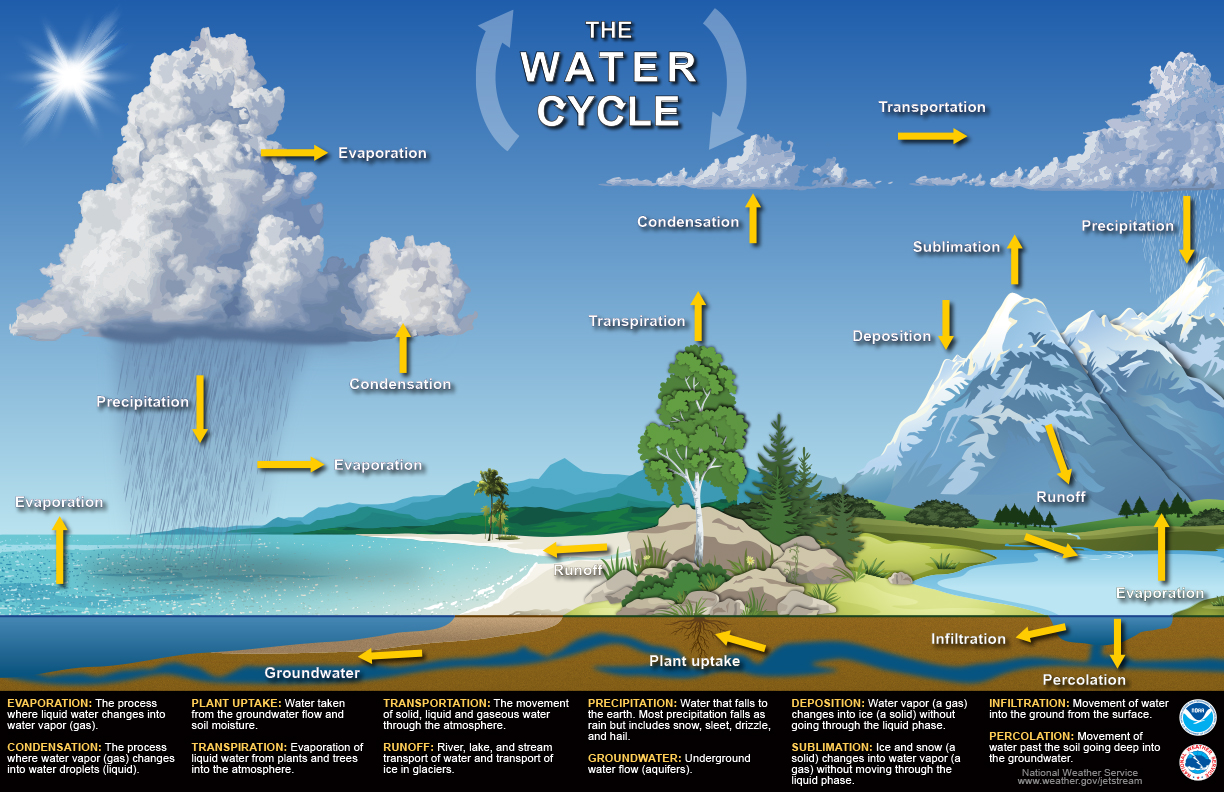
(Cycle by NOAA)
In areas surrounding Desert areas, desertification occurs more readily and spreads more quickly. As global temperatures rise, the ice caps are melting. This causes sea-level rise, affecting our coastal areas, especially our cities. Variability in weather and climate affects farmers and agriculture as instability sets in.
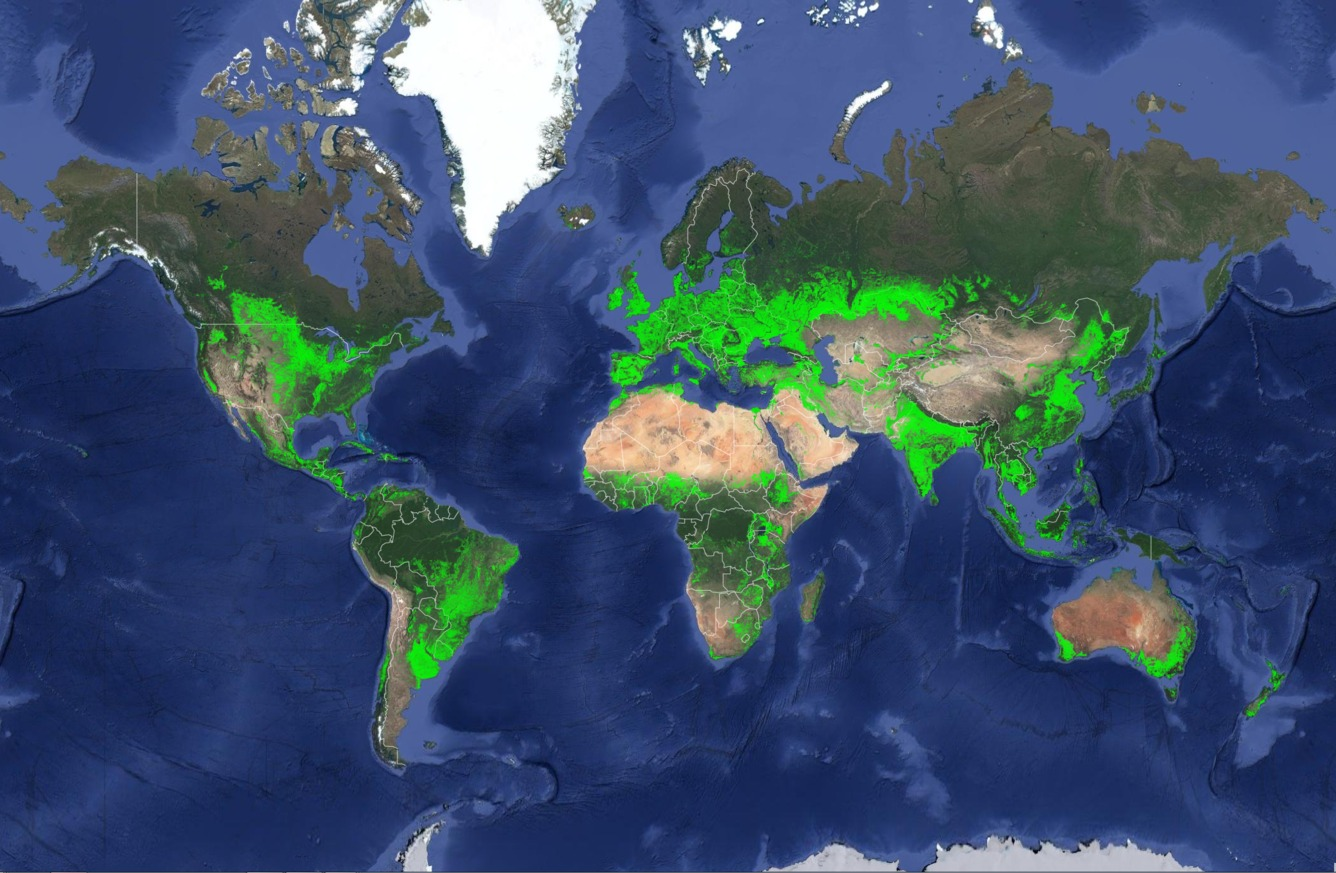
(Map by USGS)
Apparently, climate change affects ocean currents, which could also affect the weather. Is everything on earth interrelated? From atmospheric systems to ocean systems, etc., in geography, you learn about the atmosphere, lithosphere, hydrosphere, and biosphere. We must understand the impact of climate change on our world and our systems. The problem, once again, is industrial earth, Kings, castles, and kingdoms, and all the infinite variability of hierarchical structures. Most recently, the war against science has come from political structures that seem make decisions without understanding the problem in the first place. However, our election system is flawed because it allows people who don’t know as much about climate change to vote for people who don’t care. I’m not blaming the voters, as they were played by the global Earth, King’s castles-and-kingdoms rhetoric. Just because the cumulative impact is too difficult to explain does not mean we shouldn’t do something about it. I suggest prioritizing the We-Me Explorers cycle community on Earth. We ought to share a map of priorities to be addressed. Coal plants need to be closed unless there’s some way to mitigate the CO2. Coal plants also emit nitrogen oxides and sulfur dioxide, which cause acid rain and affect our water supplies.
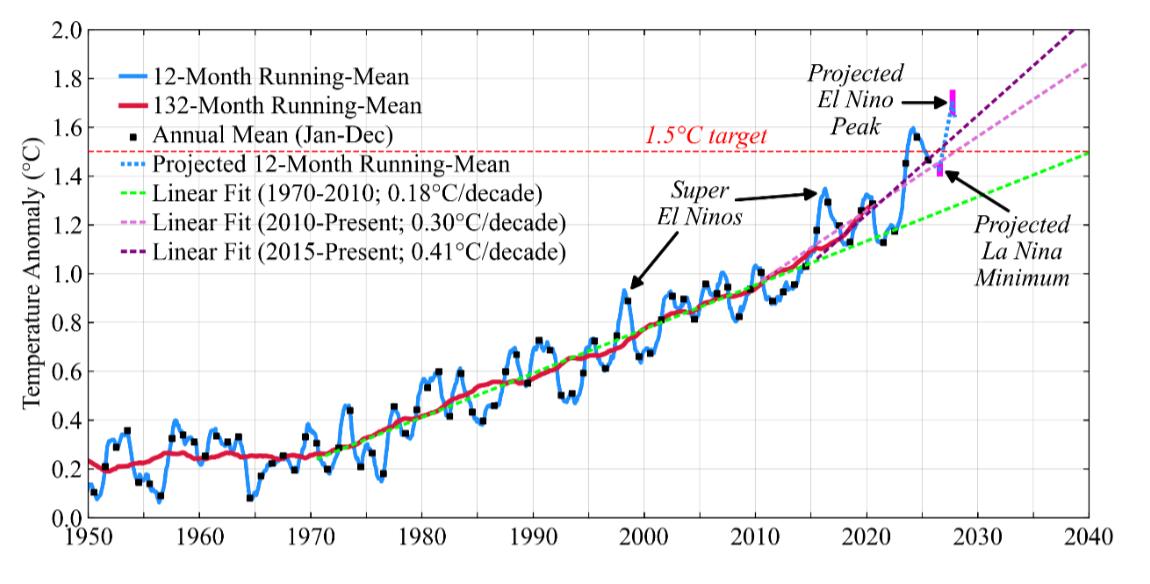
(Chart by Dr. James E. Hanson)
Consequently, once we get everyone involved in the We-Me Explorers cycle, we can all contribute our hypotheses, observations, patterns, and everything else, including opportunities to transition to sensible renewables. However, in many of these situations, an impact assessment is needed. Moreover, I created an Earth ethic concept of natural Earth striving, whereby we strive to live closer to nature, beyond what industrial Earth Kings, castles, and kingdoms taught us. Trump must be privy to what I’m writing because he created a prioritization map of planet Earth the other day. However, it had nothing to do with climate change or children suffering around the world. Consequently, I propose reversing Earth’s industrialization, reducing extreme functioning, and minimizing the influence of kings, castles, and kingdoms on our desired future. However, I’ve noticed a pattern. It seems some of them are learning from people suffering in survival zones. Therefore, they can make their politics look more appealing once they get educated. For the rest of us, it’s nothing but a roller coaster ride of extraction, exchange, and exclusion as the Kings’ castles and kingdoms in industrial Earth take everything they can from the people on Earth. We need to transition from man-centered systems to more natural, earth-striving endeavors. We need to transition our economy from an industrial, earth, Kings, castles, and kingdoms economy to a people-and-nature economy. Consequently, this will minimize the impacts on our planet, people, and natural environment. Knowing that my suggestions don’t matter much in an industrial Earth King’s castle kingdom. I’m still going to suggest transitioning to a Unidiversity Research Explorers cycle community for everyone, for everything, for everyone on earth. Nobody does it better than each of us and all of us together. World without end…
The scientific community has consistently underscored the escalating urgency of our planet’s climate crisis, driven predominantly by the persistent accumulation of greenhouse gases, particularly carbon dioxide, in our atmosphere. The profound implications of this phenomenon are now undeniably manifesting across all Earth systems, demanding our immediate and concerted attention.
We observe direct evidence of climate change in the dramatic alteration of the global water cycle. Intensified evaporation leads to more severe droughts in some regions, while simultaneously fueling more extreme precipitation events and flooding elsewhere. This disruption accelerates desertification, transforming once-fertile lands into barren expanses. Concurrently, rising global temperatures are rapidly melting our polar ice caps and glaciers, leading to an undeniable rise in sea levels that imperils coastal communities and major urban centers worldwide. The ripple effects extend to our agricultural systems, where increased weather variability and climatic instability pose significant threats to food security. Furthermore, even the vast ocean currents, which regulate global weather patterns, are showing signs of disruption, portending unpredictable shifts in regional climates. The intricate interconnectedness of our atmosphere, lithosphere, hydrosphere, and biosphere dictates that a disturbance in one system invariably cascades through the others, creating a complex web of environmental and societal challenges.
A significant hurdle in addressing this crisis stems from a prevailing industrial paradigm that, for too long, has prioritized unrestrained growth and short-term gains over ecological stewardship and long-term sustainability. This “industrial Earth” model, often characterized by concentrated power structures and a detachment from natural limits, has contributed to a concerning disregard for scientific consensus. We have witnessed how political discourse, influenced by vested interests, can undermine public understanding and obstruct evidence-based policy, creating a disquieting “war against science.” The systemic flaws that allow such inertia to persist prevent the rapid, decisive action necessary to safeguard our shared future.
However, the immense complexity of these challenges should not deter us. Instead, it must galvanize us to forge new pathways forward. I propose a fundamental shift in our approach, embracing an “Earth Ethic” centered on “Natural Earth Striving.” This concept encourages us to consciously reorient human systems towards living in closer harmony with natural processes, moving beyond the extractive and exploitative tendencies of the past. It envisions an economy not driven solely by industrial output, but by the well-being of people and nature.
To translate this vision into tangible action, I advocate for a collaborative and data-driven prioritization framework. We need to systematically identify and address the most impactful contributors to environmental degradation. For instance, the immediate phase-out or comprehensive mitigation of emissions from coal-fired power plants is non-negotiable, not only for their CO2 output but also for their significant contribution of nitrogen oxides and sulfur dioxide, which cause acid rain and devastate forests and water supplies. This is just one example of a critical step in a broader transition to sensible, renewable energy sources. Such transitions, however, must be underpinned by rigorous or broad based impact assessments to ensure equitable and effective implementation.
To foster this collective intelligence and action, I envision the establishment of a “Unidiversity Research Explorers Cycle Community” – an evolution of the “We-Me Explorers Cycle Community.” This platform would unite diverse perspectives – from scientists and policymakers to indigenous communities and grassroots innovators – to collectively contribute hypotheses, observations, and identified patterns. It would serve as a dynamic forum for open dialogue, shared learning, and collaborative problem-solving, empowering us all to co-create solutions and transition towards a future that minimizes the destructive influence of past paradigms on our desired planetary condition.
While the magnitude of change required is daunting, and entrenched interests often seem insurmountable, we cannot afford to succumb to cynicism. We must proactively reverse the trajectory of extreme industrial functioning and strive towards systems that genuinely uplift both humanity and the natural world. My experience suggests that even those most resistant to change can eventually learn from the suffering endured by communities in survival zones, leading to a more enlightened and appealing discourse. For the rest of us, the current path is a relentless cycle of extraction, exchange, and exclusion.
We possess the collective intellect and ingenuity to transition from solely man-centered systems to more natural earth-striving endeavors. We must evolve our economic models from those that perpetuate “industrial Earth” to genuine “people and nature economies.” This fundamental shift will demonstrably minimize adverse impacts on our planet, its people, and our invaluable natural environment.
I firmly believe that nobody can achieve this monumental task better than each of us, working in unison, collaboratively, and thoughtfully with all of us together.
World without end…
Traditional economics to cohesive holistic harmony and unique diversity for all
Traditional economics and investment theory are the biggest farces on earth because everything is out of context with everything else. What we see in the numbers is out-of-context functioning in an arbitrarily organized way. It is strange, too, that we can invest in organizations on earth, such as corporations, without knowing what they do. Some of these corporations could be contributing significantly to the detriment of people in the natural environment. Some of these corporations may also be involved in the takings-extraction-exclusion cycle, putting people into a survival zone of suffering. Therefore, economics merely depicts random, arbitrary data to serve its artificial roles in this world. I’m not talking about the applied economists who are trying to make sense of everything; I’m talking about those who delve into reactionary reductionism and are more employees in the industrial Earth Kings’ castles-and-knightly-kingdoms approach to Earth. In other words, it’s kind of like surfing a wave. You have to stay on top of the wave long enough until the wave crashes. Therefore, I picture Earth’s economy in danger of a crash anytime soon, as people realize it’s nothing but a farce unless we transition to a more holistic, dynamic, adaptive, and striving desired future condition. We have not been calculating the impacts on our natural environment and our people; thus, they know not what they do. Or do they…? However, I’m not losing hope that they will transition to a more in-context functioning so we can be more rational, holistic, and wise. To do so, I would suggest they learn about the natural environment, people, natural cycles, and geographic information systems maps as approaches to living on Earth.
GIS mapping gives you context that helps you understand other locational characteristics and considerations when making decisions. I’m not sure if you called this applied economics or something else, but it seems like a promising path for the future. It would be great to map out environmental impact or social impact on these maps. Basically, understanding the current state using maps is a constructive way to put the economics and the work you do in context with what’s happening on Earth. Then, applied economics and people will be able to understand cause-and-effect relationships in our overall economy on Earth and the mountains that need to be climbed because of them. As stated previously, mountains are like problems to be solved on earth, and people who often live in the valleys are the ones who can help solve them. while we contribute everything we can to reach the desired future condition. Then we will be able to focus on more holistic wealth and holistic material (durable, needs, supplies) investments, as well as the concept of applied economics. I learned a lot about economics in school, and I found it interesting. However, it was all out of context with everything else and was an interesting theory. I thought it would be great to depict supply and demand spatially, but I’m not sure if it is possible. In many ways, I see traditional economics as a traditional, compartmentalized structure within the industrial, earth-Kings’ castles-and-kingdoms approach to living on earth; every other discipline is taken from it. This is because traditional economics has the support of industrial earth, Kings, castles, and kingdoms. Whereas political support for geography, GIS, nature, natural resources, environment, and anything to do with the humanities seems to suffer. In other words, Hierarchical structures of industry, kings, castles, and kingdoms control everything on earth and all hierarchies. This is because they have all of the wealth on earth. Thus, they can arrange the deck chairs on the Titanic however they so choose, as long as it is considered theirs and within their political realm.
I am really an advocate for everyone, everything, everywhere on earth has a cycle from each of us to all of us. This We-Me Explorers cycle is likely undergoing takings, as I have found. I am looking forward to working together with everyone on earth for the benefit of everyone, everything, and everywhere on earth, from local to global, past (heaven), present, and future, with an emphasis on a holistic, sustainable, striving future. I am hoping that those involved with industrial earth, kings, castles, and kingdoms, approach living on earth. We must go to confession, reconciliation, self-assessment, and counseling so we can all work together.
It’s strange to me to take from people in a survival zone who are suffering, when we should be focusing on ourselves and learning what we should’ve learned long ago. However, just because those who contribute to the more holistic side live more simply and are guided by heart energy rationality, it does not mean you should take from them and experience joy without them. Many of them are smarter than that. Because of their heart energy and rationality, they are naturally more holistic and sustainable in their striving, which our world needs.
I have talked about the holistic-to-holy spectrum, and now I believe it’s the same concept. One can be holistic and holy, or holistic or holy, to contribute in a holistic, sustainable, striving, healthy way, because we live closer to Nature and God. Therefore, we are naturally less impactful on our planet and on our people, making this concept easy to understand. In many ways, holistic and holy people, or those more in tune with Nature and God, strive to live simpler lives. Thus, this has the least detrimental impact on our people, our natural environment, and the planet as a whole. Consequently, we should celebrate the lives of these people, for they are the ones who are closer to God and nature. Extracting from them, whether it be physical energy, mental energy, or creativity, is a formidable effort. To destroy the positive energy, they were meant to contribute to earth, given to them by the miraculous heart energy of God and nature. As I said in my previous papers, we need more heart energy now in human history than just manufactured mind energy.
However, I’m not giving up hope for everyone on earth, as we should all strive towards a holistic, sustainable future for all. I am worried that manufactured logic minds will employ concepts like obscure wars to take over the whole world, while being motivated by positive energy, rational hearts, and people on Earth. Let us all transition together in a more nature-centric, spiritual-centric, healthy-centric, and humanity-centric foundation of loving, caring, sharing, giving, forgiving, and genuine kindness, striving, so we can bring about conditions of comfort, joy, love, Hope, unity, equity, faith, and sustainable striving happiness for everyone, everything, everywhere on earth. Striving together is our only option, because the traditional historical perspective would resort to war to settle compartmentalized castle wars. It’s sort of like the Great Wall, for example. We can spend time building walls, borders, and boundaries, or we can allocate our energy toward our cohesive harmony on earth. We now have 8 billion people on this planet to contribute, whereas it took millions of people over centuries to build the Great Wall. Imagine what we could do. Nobody does it better than each of us, and all of us together, world without end…
Gold mining paradigm to restoration and restitution
Do we see money as a kind of gold-mining concept, only not recognizing the great benefits, value, and energy that can be created when we allocate to holistic endeavors? When we allocate to holistic endeavors, the return on investment is too hard to calculate. However, destroying our environment and our people for wealth accumulation, especially in the past and present, is a ridiculous idea. Wealth accumulation these days is mostly about accumulating wealth out of context with reality. We need more in-context assessment and holistic wisdom to determine where to allocate our energy and where it will benefit us. In many ways, we need to transition this wealth accumulation concept, gold mining to investment, in the well-being of our people and our planet, including our natural environment. Then, those great works will benefit us through future investment dividends. Gold mining that does not take into consideration all the holistic values we have in our world is an irresponsible endeavor and is meant for manufacturing facilities, King’s castles, and kingdoms’ approach to living on earth. What is going on now? Is the knowledge extraction, exchange, and exclusion cycle taking place because Goldminers are aware of what they’ve been doing over the last thousand years or so?
Therefore, those who live life more holistically, with more holistic endeavors, always seem to lose because the compartmentalized industrial earth, kings, castles, and kingdoms are always in control. In essence, they take everything from people who have allocated their physical energy, learned a great deal, created, and are striving towards a more holistic, sustainable, and thriving future. As the industrial earth kings, castles, and kingdoms create sustainability indices on the stock market, and sustainability executives within their hierarchies. Unfortunately, many people have suffered because of this concept. In many ways, the places where I’ve chosen to live have been invaded by industrial earth, Kings’ castles and kingdoms, seeking to replicate my context. If they were holistic, motivated, and positive-energy people, that would be great. However, my experience has been that industrial earth, King’s castles, and kingdoms control all their employees. It is time to break free of employment, as it shows your loyalty to the industrial earth, the Kings’ castles, and the kingdom’s approach to living on earth. I am more interested in everyone, everything, and everywhere on earth, and I want to see the best in every beating heart. However, the concept of taking is really troubling for all of us on earth because it shows how desperate industrial society, kings, castles, and kingdoms are to maintain their control over the planet. Hence, it may be time for industrial earth, King’s castles in kingdoms, to give up their compartmentalized controlling functions and genuinely strive to make a holistic difference in our world by contributing to restoration on planet Earth. We must give those who were taken more energy to lead with creativity, energy allocation, and ideas for the future. It is challenging to live in the past, present, and future at the same time, so I don’t have any specific recommendations about what we should do. However, transitioning in a holistic way after reconciliations, confessions, and counseling sessions would be the best way forward. We especially need to end the Omerta on planet Earth so this recommendation can take effect. Ultimately, everyone in the industrial Earth Kings’ castles and kingdoms, and those experiencing life on Earth, should be forgiven, but not without restitution in a holistic, ecogeographic way. I plead with everyone to do what you can to help transition our world towards a more holistic, sustainable, thriving condition, using everything you know how to do. Nobody does it better than each of us and all of us together, world without end…