Greetings,
The Unidiversity Research Explorers Cycle, or the We-Me Cycle for short, benefits everyone, everything, everywhere on Earth, past, present, future, local to global, and beyond. For example, Exploration and learning points involve collecting ground coordinates to use for training imagery. This imagery can be used to train remote sensing data to help solve major problems on Earth from space. From a more local perspective, it allows you to collect learning points to navigate like a geology field trip, a forest Field trip, or any field trip you can imagine. You can learn about herbaceous plants, ferns, mammals, tree species, wetland species, streams, lakes, oceans, coral reefs, or anything else. This helps you learn patterns, observations, essential concepts, and things to pay attention to as you learn about anything you want to know. It is kind of like an expansion of GIS itself, as it is up to the explorer’s imagination, like the application of GIS, which is limited only by the imagination of those who use it. (Jack Dangermond 1998)
Coordinates can be used to locate places to paint or capture an image, such as a landscape or a unique feature on Earth’s surface. Exploration and Learning points also allow you to be creative because everything that you’ve learned has context. Your context enables the contribution of creativity, ideas, hypotheses, and anything else you can imagine. This is especially true when you consider the needs of our planet. By capturing coordinates of needs, we can immediately notify the Unidiversity of someone or something that needs help. Likewise, if you have a creative idea or innovation on it, you can report it as well. Unlike today’s manufacturing facility of industrial earth where King’s castle and kingdoms take your ideas, the Unidiversity allows everyone to get credit for their ideas on earth without having to go through that reactionary reduction, structure, infinitely variable, and dynamic to avoid detection. Therefore, the needs you identify, the creativity you contribute, and your innovative ideas not only help you but also help our planet, including your local areas and communities. Moreover, imagine holistic, prescriptive advice and holistic prevention. If you see a hazard or something that could detrimentally impact anyone, anything, anywhere, or everyone, everything, everywhere, you can immediately let the world know about it. You can at least start a discussion about whatever you identify. Therefore, given the totality of all the contributions you have to offer on earth, you can gain inspirational incentives for that information and wisdom.
We stand at a pivotal moment, poised to unlock unprecedented capabilities in understanding and safeguarding our planet. Imagine a framework where every observation, every unique geographical detail, and every pressing need on Earth can be precisely located, documented, and transformed into actionable insight. This is the essence of our vision: to empower individuals to contribute “Learning Points” – meticulously georeferenced data — that will revolutionize how we interact with our world.
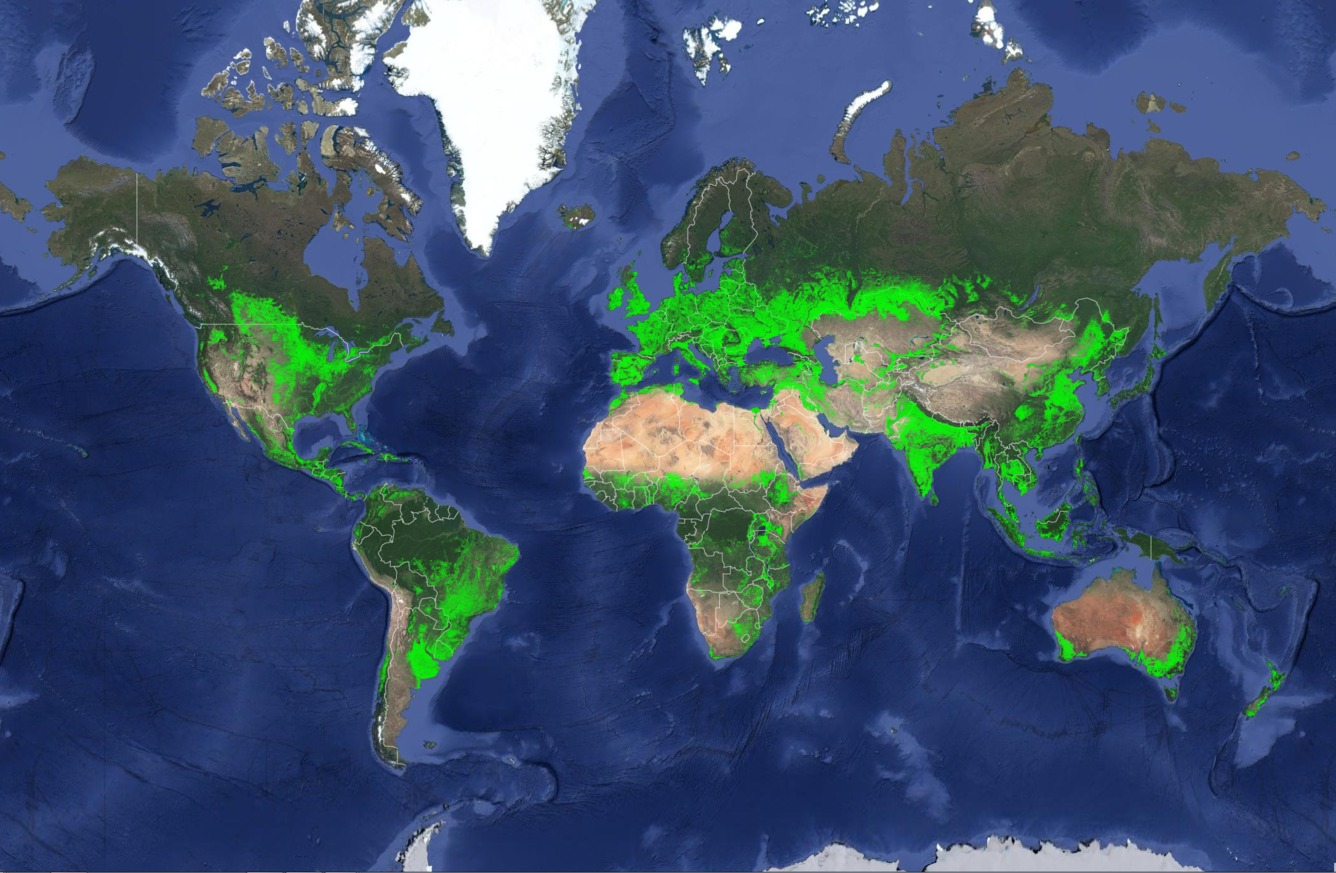
At its core, this initiative leverages the power of spatial intelligence. By collecting precise coordinates, we can feed a global repository of knowledge, essential for training advanced remote sensing models and artificial intelligence. These sophisticated systems, powered by your contributions, can then analyze vast streams of satellite imagery and environmental data, identifying patterns, predicting challenges, and ultimately guiding solutions to humanity’s most complex problems – from climate change and resource scarcity to biodiversity loss, all viewed from the unparalleled vantage point of space.
Beyond these grand, global applications, the concept resonates powerfully on a personal level. Picture yourself embarking on a geological expedition, a botanical survey, or an urban exploration. With “Learning Points,” you can map out critical observation sites, document unique formations, or pinpoint areas of particular interest, creating a living guide for immersive fieldwork and learning. This practice cultivates a profound sense of observation, helping you discern subtle patterns, identify significant features, and deepen your understanding of any discipline that touches the Earth. It transforms passive learning into active discovery, fostering a unique connection to your surroundings.
Moreover, this context-rich environment is a fertile ground for creativity. A specific coordinate might mark the breathtaking vista that inspires a painting, the unusual rock formation that sparks a geological hypothesis, or the ecological anomaly that demands an innovative conservation strategy. When every piece of information is grounded in tangible reality, it provides a robust foundation for new ideas, scientific inquiry, and artistic expression.
Crucially, this vision extends to the concept of the “Unidiversity” – a truly decentralized, global collaborative network designed to address the urgent needs of our planet and its inhabitants. By pinpointing and capturing the coordinates of a community’s needs, a natural hazard, or an environmental threat, we can instantly alert a global collective, mobilizing resources and expertise where they are most required. Conversely, if you possess a brilliant idea, a groundbreaking innovation, or a practical solution, the Unidiversity provides a platform for you to share it, develop it, and receive due credit. Unlike traditional, often restrictive paradigms that centralize intellectual property, the Unidiversity champion’s open collaboration, ensuring that every contributor’s ingenuity is recognized and celebrated, fostering a dynamic and infinitely adaptable ecosystem of problem-solvers.
Imagine a future where every citizen acts as a proactive steward of the Earth. If you observe a potential hazard – be it a pollutant, a dangerous structural flaw, or an impending environmental threat – you can immediately document and share its location. This collective, real-time intelligence empowers us to move beyond reactive measures towards holistic prevention and prescriptive action, initiating vital discussions and interventions before crises escalate.
Your contributions – your observations, your creativity, your innovative ideas – are not just beneficial to you; they are vital to the health and sustainability of our entire planet, profoundly impacting your local communities and regions. To acknowledge and encourage this invaluable participation, we envision a system that provides inspirational incentives, recognizing the wisdom and effort you invest in building this shared knowledge base.
Join us in building this transformative network, where every pinpointed coordinate is a step towards a more informed, creative, and resilient future for all.
Sincerely
Richard Thomas Simmons et al