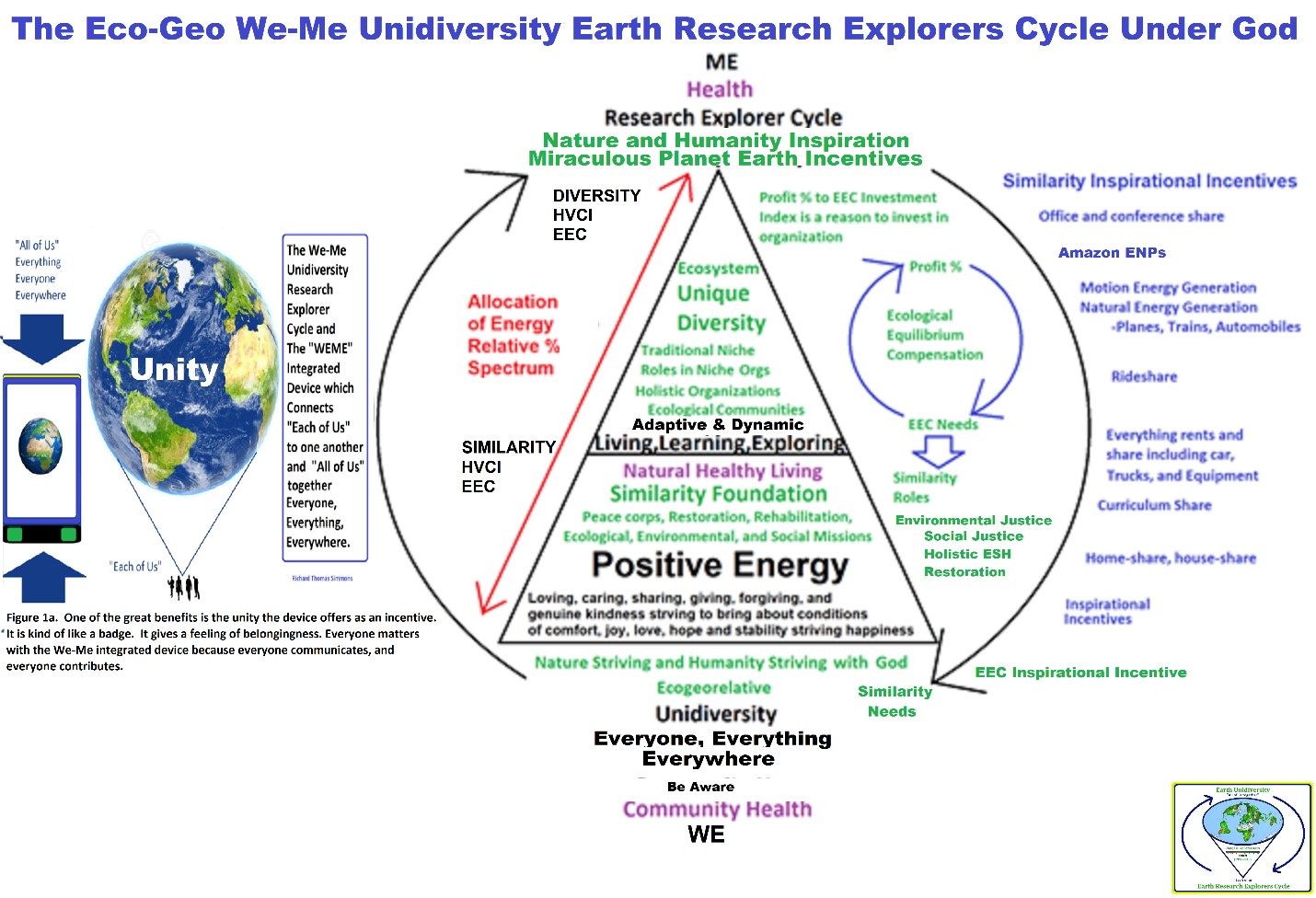
Subservience, pressures, conflict, controversy, fragmentation, and complexity manifest as impacts on people and on the natural and social environments. This is especially true when we have lack of holistic justice systems, environmental injustice, and social injustice People are affected by phenomena created by traditional society within organizations of all types. Excessive judging also affects people. The way I see it, there are three downwards spiral cycles involved in this concept. The inner cycle involves the types of medicine people use to feel better in our society when they’re being impaled by all kinds of negativity and stress. Types of medicine include drugs, excess, alcohol, promiscuity, and relationship problems. This cycle is a downward-spiral feedback loop that results in more and more of the same until an inflection point is reached. This inflection point manufactures more impacts, which result in crime, violence, terrorism, mass shootings, mental health problems, psychological problems, depression, and physical problems, which manifest themselves in another cycle with reactionary justice, reactionary medicine, and reactionary psychology. So our society creates a concept of people who are detrimentally impacted. Everyone should have the chance to go to school, explore, live, learn, love, and be included and accepted in organizations, groups, and communities. However, these people too often get involved in hierarchical organizations and politics, which contributes to a detrimental impact on others. There is a top-down force that magnifies as you move down from the top, resulting in people at the bottom being affected more than those at the top. Therefore, the holistic, positive energy people tend to contribute to the negative energy and detrimental impacts by getting involved in traditional functioning. A lot has to do with extreme competition in our world and the extraction, exchange, and exclusion of people’s ideas and creativity, as well as their manual labor and energy. Too much credit is given to people at the top and not enough to people at the bottom or in the middle of the hierarchy. Therefore, it’s not anybody’s fault in particular, it’s kind of like the status quo of the way things are world. It harms people and creates negative-energy downward-spiral feedback loops, which contribute to more of the same. Consequently, I believe we all need to be treated as holistic, well-motivated, positive-energy people, and to restore health to those who have been impacted over time.
The unidiversity research explorer cycle is a concept of inclusion, acceptance, and restoration of mind, body, and soul. It inspires people to live, learn, love, explore, and contribute to everyone everything everywhere on earth, from local to global. It creates genuine, loving, caring, sharing, giving, forgiving, and genuine kindness in people, bringing about conditions of comfort, joy, hope, love, unity, equity, and sustainable, striving happiness. We will all help people become holistic, well-motivated, positive-energy people in a genuine way, rather than a perception-based way. This involves people becoming associated with strength, fitness, conditioning, inclusion, and acceptance, and getting involved in research and exploration on Earth. Long ago, I had a hypothesis that it’s some kind of detrimental, impacting force, and competition from abroad that’s causing our drug problems. However, I think it’s more of an integrated concept of creating demand for drugs, as well as providing them to people.
Our modern society, often characterized by intricate hierarchies, competitive pressures, and systemic conflicts, inadvertently generates profound challenges for both individuals and our planet. These ingrained dynamics foster environments where individuals frequently feel burdened, judged, and disconnected, leading to widespread distress within our social fabric and tangible impacts on our natural ecosystems.
In response to this persistent negativity, many seek solace in what might be termed ‘reactive remedies’ – be it through substance misuse, unhealthy relational patterns, or other forms of escapism. This often precipitates a detrimental cycle, where attempts to alleviate suffering instead deepen personal and societal wounds, spiraling downwards towards a critical inflection point. This point of crisis inevitably manifests as pervasive societal ills, including escalating rates of crime, violence, profound mental health crises, and various physical ailments. Rather than addressing root causes, our societal response often remains reactive, characterized by punitive justice systems, symptom-focused medical interventions, and superficial psychological approaches.
Essentially, our current paradigm seems to be inadvertently structured to produce ‘impacted individuals’ rather than nurturing ‘holistic, positively motivated, and resilient human beings.’ Even those who embody positive energy and possess inherent motivation often find themselves entangled in the very hierarchical and competitive structures designed to include them. Their involvement, despite good intentions, can inadvertently perpetuate the systemic behaviors that cause detriment to others, as the ‘top-down’ forces amplify negative impacts. The inherent nature of these hierarchies is such that negative forces and decisions originating at the top are disproportionately amplified and experienced by those at the base, creating a profound imbalance.
This dynamic is further exacerbated by an overemphasis on extreme competition, which often leads to the extraction, exclusion, and devaluation of diverse ideas, creativity, and labor, concentrating rewards at the apex rather than distributing them equitably. It’s not about individual blame, but rather a pervasive systemic status quo that perpetuates these detrimental impacts and positive feedback loops, leading to a continuous cycle of distress and disempowerment.
It is my profound conviction that a transformative shift is necessary: one where every individual is recognized and nurtured as a holistic, positively motivated being, and where collective efforts are dedicated to restoring well-being to all who have been adversely affected. This conviction underpins the ‘Unidiversity Research Explorer Cycle’ – a transformative framework designed to foster genuine inclusion, profound acceptance, and holistic restoration of mind, body, and soul. It aims to ignite within each person an innate drive and passion to live purposefully, learn continuously, love unconditionally, explore boundlessly, and contribute meaningfully to the well-being of all, from local communities to the global ecosystem.
Through this cycle, we envision cultivating a society founded on genuine kindness, compassion, sharing, giving, and forgiveness. It seeks to establish conditions of comfort, joy, hope, unwavering love, true unity, profound equity, and sustained, striving happiness for everyone. This is not merely a perceptual shift, but an active, genuine journey towards empowering individuals to become holistic, positively motivated contributors. It emphasizes fostering personal strength, fitness, and conditioning, while simultaneously promoting deep inclusion, radical acceptance, and active engagement in collaborative research and exploration across all facets of our world.
My early hypotheses sometimes focused on external forces, such as international competition, as primary drivers of complex issues like substance abuse. However, my understanding has evolved; I now perceive these challenges as deeply integrated, stemming from systemic factors that both create the demand for harmful coping mechanisms and facilitate their provision within society. We must collectively address these intricate interdependencies to build a truly flourishing future.
Please see the following diagram, which attempts to explain the phenomenon we experience currently.