All posts by Rick Simmons

Founding contributor and creator of Natural Earth Striving an Earth Ethic and Earth Research Explorers, a vision that accepts and includes everyone on Earth as stakeholders, stewards, explorers, researchers, creators, pattern recognizers, ground truthers, innovators, hypothesis generators, etc. Suppose you look at these two entities and consider them as a cycle. In that case, it gets everyone contributing towards a more continuous adaptive striving for desired future conditions on planet Earth from a broad scale to a fine scale. This leads us to a more holistic positive energy reality for the health of everyone, everything, everywhere on Earth. The vision includes a loving, caring, sharing, giving, forgiving, genuine kindness striving to bring about conditions of comfort, joy, love, hope, faith, and sustainable striving happiness foundation for everyone on Earth, transitioning most laws, rules, regulations, policies, to holistic prescriptive advice.

Wildfires in California and Hawaii and ecological equilibrium compensation

I heard yesterday that the fire victims in Los Angeles are having difficulty getting back to their homes.  Apparently, the amount that the insurance companies are willing to pay and the amount that it cost to rebuild are two different things.   This is an example where ecological equilibrium compensation ought to be applied to those victims that suffered that catastrophic fire.  The same is true for the victims in Hawaii as well.   If we were functioning with Unidiversity research, explorer cycle, corporate, profits, and individual investment would provide an equilibrium balance for those that endure this difficult loss.  

I was profoundly concerned to learn recently about the immense and systemic challenges confronting fire victims in Los Angeles and Hawaii as they strive to rebuild their lives and communities. It has become evident that there is a significant and disheartening disparity between the typical insurance payouts and the actual, comprehensive costs associated with true reconstruction and recovery in these devastated areas. This gap leaves countless individuals and families in a deeply vulnerable position, often unable to fully reclaim what they have lost. In fact, it is such a serious problem people are dying.

This pressing situation highlights the critical need for a more adaptive and equitable compensation framework – one that transcends mere asset replacement and genuinely seeks to restore what could be called “ecological equilibrium.” Such a framework would encompass not only the physical structures but also the social, economic, and environmental fabric of affected communities, ensuring a holistic path to recovery and long-term resilience.

To cultivate such a forward-thinking system, I propose we champion an integrated approach, leveraging interdisciplinary research and an adaptive ‘explorer cycle’ for solution development and implementation. This would involve a concerted effort to analyze existing gaps and innovate new financial and support mechanisms. Imagine a collaborative cyclic system where corporate entities strategically contribute from their profits, individual investments are thoughtfully channeled, and cutting-edge research guides continuous improvement. This multi-stakeholder engagement could collectively establish a sustainable “equilibrium balance,” providing the comprehensive support necessary for those who endure such profound and life-altering losses to not just rebuild, but to thrive once again and foster enhanced resilience against future adversities.

We stand at a pivotal moment to fundamentally rethink how we support communities in the wake of escalating natural disasters, moving beyond reactive measures toward proactive, sustainable, and truly regenerative recovery models.  Maybe profit should be provided from those organizations that contribute significantly to climate change. Since wildfire is a normal aspect of ecological succession as well, maybe ecological equilibrium compensation investment could come from other sources as well. Either way resilient structures should be built in the future.

Monoculture presence or absence indicator

As far as the top-down reaction to the murder of Renee, we have to use the opportunity to calculate a yes, man (woman) index to the administration’s response to this incident.    I have never seen such a top-down culture like we have witnessed with the administration.   Seems like no one can think for themselves.  When calculated, this index can be used as an indicator species approach to understand the individual persons Trustworthiness and future autonomous decision-making skills.   Other personality traits can be expanded from this index as well.  Should they get investment from people?

 I have been reflecting deeply on the administrative response to the tragic events surrounding Renee, and a significant concern has emerged regarding the observable homogeneity in official communications and actions. The uniformity of perspective suggests a highly centralized decision-making process, where independent analysis and diverse viewpoints may be notably absent.  Are we witnessing a monoculture in action?  We should study The overall phenomenon in a more scientific way as suggested.

This observation prompts me to propose the development of an analytical framework—perhaps termed a “Critical Autonomy Index”—designed to quantify the extent to which individual discretion and independent judgment are exercised within an organizational structure during periods of significant challenge. My hypothesis is that an excessively conformist or unvarying reaction can serve as a critical diagnostic indicator.

Such an index would function akin to an “indicator species” in ecological studies, providing invaluable insight into the underlying trustworthiness and fundamental reliability of individuals and, by extension, the entities they represent. Expanding beyond mere compliance, this metric could illuminate other essential leadership and character traits crucial for ethical governance and sound strategic direction.

Furthermore, a robust understanding derived from this index could become a vital component in due diligence. For those considering strategic partnerships, financial commitments, or any form of investment, assessing the capacity for independent critical thought within an organization’s leadership structure is paramount. An environment where genuine critical assessment is stifled inherently presents elevated risks, potentially undermining long-term viability and accountability.   

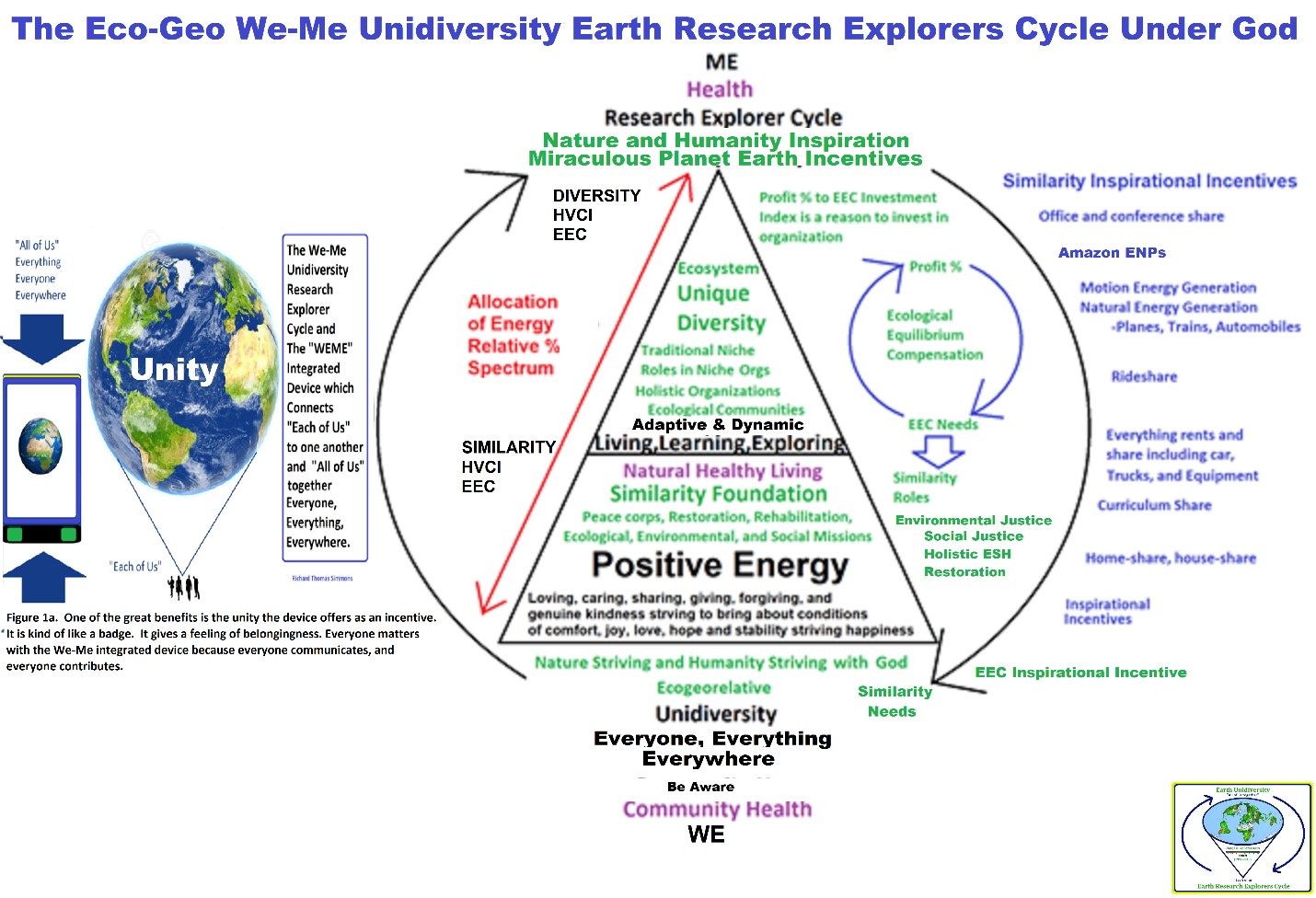
Furthermore, this situation does not meet the loving, caring, sharing, giving, forgiving, genuine, genuine kindness striving index criteria for the future.  Nor does it bring about comfort, joy, love, Hope, unity, equity, faith and sustainable, striving happiness.   Likewise, it does not fit the Unidiversity research explorer cycles similarity, and unique diversity pyramid.   This pyramid indicates that we all should be both similar and diverse as both are vital for a healthy world as far as decision-making processes are concerned.   Diversity is especially important as it creates stable systems, and similarity creates uniform context or firm foundation by which we should function. Consequently, this analysis must occur otherwise we will have an unhealthy monoculture, and monocultures are more susceptible to perturbation, the perturbation putting us all at risk.

Observations about Renee Good shooting

The officer (His Mom named him Jonathon) Ross shot at a motor vehicle driver (her mom named her Renee Nicole) Good, putting others in jeopardy because the vehicle went out of control after she was shot. If there were bystanders, they would’ve been injured or killed.

The officer looked like he put himself between the driver and her intended destination on purpose.

It almost looked like the officer was challenging the automobile and the driver by standing in front of car

The officer has challenged cars in the past and has been dragged.

She was smiling and being kind to the officer before the shooting.

The officer had the license plate of the car and could’ve talked to Renee later on after she left 

There was no immediate need to prevent her from fleeing.

It seems he may have been trying to balance all that he knows about procedures, etc., but was not using any common sense in the situation. 

The officer was being heckled and antagonized by others, which he could have interpreted as challenging his authority

Video captures Jonathon saying “fucking bitch”.

Are we evolving towards a top down police state?

Are we at war?

To be continued…

Killing doesn’t meet the criterion of the desired future condition world.

The killing of a person, especially by shooting them in the face, does not meet the criteria and is not a desired future condition in our world.   Those criteria are loving, sharing, caring, giving, forgiving, genuine kindness, striving to bring about conditions of comfort, joy, love, hope, unity, equity, faith, and sustainable, striving happiness. The criterion can also be used as relative indicators as well. However, for example, in this situation using the Boolean indicators, the shooting of Renee Good (her mom named her Renee Nicole) does not meet the loving standard, the caring standard, the giving concept, the sharing concept, the forgiving criteria, and is not Genuine kindness.   Furthermore, the actions of the officer do not bring about conditions of comfort, joy, love, hope, unity, equity, faith, nor sustainable, striving happiness.   These are the criteria by which we can assess our own actions in the future, instead of relying on reactionary law.     Likewise, this act of violence does not meet natural earth, striving, natural humanity, striving, natural spirituality, striving, and natural, healthy, living, striving earth ethics either.   Maybe we ought to make a transition to this new system before it’s too late for others.

Acts of extreme violence, particularly those executed with such brutal disregard for human life, stand in stark opposition to the foundational principles upon which any truly desirable future society must be built. Our collective aspiration, the very blueprint for a thriving civilization, is predicated on fostering environments of profound compassion, mutual respect, and generative goodwill. This encompasses the virtues of love, empathy, generosity, forgiveness, and genuine kindness – all working in concert to cultivate conditions of comfort, boundless joy, enduring hope, authentic unity, fundamental equity, unwavering faith, and sustainable, striving happiness.

When we witness tragedies such as the shooting of Renee Good , it becomes painfully evident how utterly disconnected such actions are from these vital ethical standards. They are antithetical to the very essence of love, care, generosity, and genuine kindness we profess to uphold. Moreover, the consequences of such acts invariably dismantle any semblance of comfort, joy, love, hope, unity, equity, or sustainable happiness, instead sowing seeds of trauma, division, fragmentation, conflict, controversy, and despair within our communities.

These deeply human values must serve as the unequivocal criteria by which we critically evaluate our individual and collective actions, moving beyond a sole reliance on reactive legal, laws, rules, regulations, policies, and procedures frameworks. True holistic justice (social and environmental) and progress demand a proactive, values-driven holistic introspection. Furthermore, this violent paradigm betrays not only our innate humanity but also our profound connection to the natural world. It fails to align with the intrinsic ethics of sustainable coexistence, natural spirituality, and healthy, thriving life on Earth.

It is imperative that we collectively commit to a fundamental transition towards this integrated, values-based system – not merely as an aspiration, but as an urgent and deliberate transition essential for the flourishing of all, before the irreversible toll becomes too great.

Desensitization of murder and violence

Dear everyone,

The desensitization of murder and violence is a real concept. The news spreads the information around to the rest of us, but we internalize or become desensitized to the irrational event. This is especially true when Renee Nicole Good (her Mom named her Renee Nicole) was shot to death in the face by an ICE agent.  These events prepare us for the next audacious example of traditional injustice.   The more mass shootings and other killings happen, the more we expect others to happen as well.  This is wrong. Killing is wrong.    We need to stop this big picture downward spiral before it spins out of control. This is because the more it happens, the more it strangely becomes accepted as the norm, allowing its continuation.  This condition makes it acceptable in the minds of mass shooters and other killers.

I am compelled to address a profoundly disturbing trend that I believe is eroding the very fabric of our society: the pervasive desensitization to violence and murder. We are increasingly bombarded with narratives of tragic loss and systemic brutality, a relentless stream of information that, instead of fostering empathy, paradoxically dulls our collective moral compass.

This constant exposure, often through news cycles and various media, risks normalizing the unimaginable. When acts of egregious violence, such as mass shootings or disturbing incidents involving those in positions of authority, become almost commonplace, we begin to unconsciously adjust our expectations. The initial shock gives way to a grim anticipation, a dangerous acceptance that such horrors are an inevitable part of our reality. This intellectual and emotional detachment is a critical failure, allowing us to compartmentalize unspeakable acts rather than confront their profound implications.

Every life lost to violence represents an irretrievable tragedy, a fundamental injustice that demands our unwavering outrage and a collective commitment to prevention. The sanctity of human life should remain paramount, and any erosion of this principle signals a dangerous downward spiral for our civilization. We cannot afford to become spectators in this unfolding drama, passively consuming accounts of brutality until they lose their power to shock and galvanize us into action.

It is imperative that we, as individuals and as a society, consciously resist this insidious process of desensitization. We must reaffirm our commitment to holistic justice, empathy, and the unwavering belief that all acts of violence are unequivocally wrong. Breaking this cycle requires a renewed collective vigilance and a proactive effort to address the root causes and manifestations of violence in all its forms.

We have a moral obligation to halt this descent and cultivate a culture where human life is universally cherished and protected.

Sincerely,

Richard Thomas Simmons

Detrimental impact cycles

Subservience, pressures, conflict, controversy, fragmentation, and complexity manifest as impacts on people and on the natural and social environments. This is especially true when we have lack of holistic justice systems, environmental injustice, and social injustice   People are affected by phenomena created by traditional society within organizations of all types.   Excessive judging also affects people.   The way I see it, there are three downwards spiral cycles involved in this concept. The inner cycle involves the types of medicine people use to feel better in our society when they’re being impaled by all kinds of negativity and stress.  Types of medicine include drugs, excess, alcohol, promiscuity, and relationship problems.   This cycle is a downward-spiral feedback loop that results in more and more of the same until an inflection point is reached. This inflection point manufactures more impacts, which result in crime, violence, terrorism, mass shootings, mental health problems, psychological problems, depression, and physical problems, which manifest themselves in another cycle with reactionary justice, reactionary medicine, and reactionary psychology.   So our society creates a concept of people who are detrimentally impacted.   Everyone should have the chance to go to school, explore, live, learn, love, and be included and accepted in organizations, groups, and communities.   However, these people too often get involved in hierarchical organizations and politics, which contributes to a detrimental impact on others.  There is a top-down force that magnifies as you move down from the top, resulting in people at the bottom being affected more than those at the top.   Therefore, the holistic, positive energy people tend to contribute to the negative energy and detrimental impacts by getting involved in traditional functioning.   A lot has to do with extreme competition in our world and the extraction, exchange, and exclusion of people’s ideas and creativity, as well as their manual labor and energy.   Too much credit is given to people at the top and not enough to people at the bottom or in the middle of the hierarchy.   Therefore, it’s not anybody’s fault in particular, it’s kind of like the status quo of the way things are world.  It harms people and creates negative-energy downward-spiral feedback loops, which contribute to more of the same. Consequently, I believe we all need to be treated as holistic, well-motivated, positive-energy people, and to restore health to those who have been impacted over time.  

The unidiversity research explorer cycle is a concept of inclusion, acceptance, and restoration of mind, body, and soul.  It inspires people to live, learn, love, explore, and contribute to everyone everything everywhere on earth, from local to global.   It creates genuine, loving, caring, sharing, giving, forgiving, and genuine kindness in people, bringing about conditions of comfort, joy, hope, love, unity, equity, and sustainable, striving happiness.    We will all help people become holistic, well-motivated, positive-energy people in a genuine way, rather than a perception-based way.   This involves people becoming associated with strength, fitness, conditioning, inclusion, and acceptance, and getting involved in research and exploration on Earth.    Long ago, I had a hypothesis that it’s some kind of detrimental, impacting force, and competition from abroad that’s causing our drug problems. However, I think it’s more of an integrated concept of creating demand for drugs, as well as providing them to people.

Our modern society, often characterized by intricate hierarchies, competitive pressures, and systemic conflicts, inadvertently generates profound challenges for both individuals and our planet. These ingrained dynamics foster environments where individuals frequently feel burdened, judged, and disconnected, leading to widespread distress within our social fabric and tangible impacts on our natural ecosystems.

In response to this persistent negativity, many seek solace in what might be termed ‘reactive remedies’ – be it through substance misuse, unhealthy relational patterns, or other forms of escapism. This often precipitates a detrimental cycle, where attempts to alleviate suffering instead deepen personal and societal wounds, spiraling downwards towards a critical inflection point. This point of crisis inevitably manifests as pervasive societal ills, including escalating rates of crime, violence, profound mental health crises, and various physical ailments. Rather than addressing root causes, our societal response often remains reactive, characterized by punitive justice systems, symptom-focused medical interventions, and superficial psychological approaches.

Essentially, our current paradigm seems to be inadvertently structured to produce ‘impacted individuals’ rather than nurturing ‘holistic, positively motivated, and resilient human beings.’ Even those who embody positive energy and possess inherent motivation often find themselves entangled in the very hierarchical and competitive structures designed to include them. Their involvement, despite good intentions, can inadvertently perpetuate the systemic behaviors that cause detriment to others, as the ‘top-down’ forces amplify negative impacts. The inherent nature of these hierarchies is such that negative forces and decisions originating at the top are disproportionately amplified and experienced by those at the base, creating a profound imbalance.

This dynamic is further exacerbated by an overemphasis on extreme competition, which often leads to the extraction, exclusion, and devaluation of diverse ideas, creativity, and labor, concentrating rewards at the apex rather than distributing them equitably. It’s not about individual blame, but rather a pervasive systemic status quo that perpetuates these detrimental impacts and  positive feedback loops, leading to a continuous cycle of distress and disempowerment.

It is my profound conviction that a transformative shift is necessary: one where every individual is recognized and nurtured as a holistic, positively motivated being, and where collective efforts are dedicated to restoring well-being to all who have been adversely affected. This conviction underpins the ‘Unidiversity Research Explorer Cycle’ – a transformative framework designed to foster genuine inclusion, profound acceptance, and holistic restoration of mind, body, and soul. It aims to ignite within each person an innate drive and passion to live purposefully, learn continuously, love unconditionally, explore boundlessly, and contribute meaningfully to the well-being of all, from local communities to the global ecosystem.

Through this cycle, we envision cultivating a society founded on genuine kindness, compassion, sharing, giving, and forgiveness. It seeks to establish conditions of comfort, joy, hope, unwavering love, true unity, profound equity, and sustained, striving happiness for everyone. This is not merely a perceptual shift, but an active, genuine journey towards empowering individuals to become holistic, positively motivated contributors. It emphasizes fostering personal strength, fitness, and conditioning, while simultaneously promoting deep inclusion, radical acceptance, and active engagement in collaborative research and exploration across all facets of our world.

My early hypotheses sometimes focused on external forces, such as international competition, as primary drivers of complex issues like substance abuse. However, my understanding has evolved; I now perceive these challenges as deeply integrated, stemming from systemic factors that both create the demand for harmful coping mechanisms and facilitate their provision within society. We must collectively address these intricate interdependencies to build a truly flourishing future.

Please see the following diagram, which attempts to explain the phenomenon we experience currently.

Kicking the people closer to the bottom of the hierarchy

There’s a saying in society: when you get frustrated, you kick the dog.   Not trying to call anybody a dog, but it seems like the people get the brunt of the frustration with our society today.  The detrimental impacts always come down to the people.  I wonder if the police departments, ICE, border patrol, and all other enforcement-type professions are being kicked and blamed for the societal problems that we have today, resulting in transference to people.   Its functioning mimics corporate hierarchy.   The impact of this causes children of God to lose their lives.  The same is true for our military and its expectations.  Are the killings of George Floyd and Renee Good an example of this kind of phenomenon?   Our police officers and enforcement professionals are so stressed out and required to follow so many protocols, laws, rules, regulations, procedures, and policies that they get in the way of natural common sense and rationality. Mass shootings and gun violence also come to mind regarding this phenomenon. The stressors from the top always end up at the bottom somehow, someway.  I think it all has to do with our priorities in today’s world. We need to transition to more holistic, sustainable, and striving priorities and invest in those instead of traditional functions.

I find myself compelled to reflect on a persistent challenge within our society: the propensity to assign blame and frustration to those on the front lines and to the people themselves.  There is an unfortunate, yet pervasive, societal tendency for collective anxieties and systemic failures to manifest as a disproportionate burden on specific professions or God’s children, the people.   Our law enforcement agencies, border patrol personnel, and military forces, in particular, appear to frequently bear the brunt of public exasperation, often being held accountable for deep-seated societal issues that extend far beyond their operational purview.  In fact, they often see people at their worst, so they get tunnel vision, thinking all people are so-called criminals.   Both the Minneapolis, Minnesota, killings were wrong from my point of view.    Police and ICE should have never been sent to do this work in the first place. We should’ve invested in these people’s home countries so that the desire to seek a better life in the United States never existed in the first place.     Instead, we’re too concerned about investing in traditional structures and manifestations of out-of-context ignorance.   First, we need to decide what our desired future condition is in our world today. Then we can begin to solve the problem of immigration.   I’m sorry I’m so blunt here, but whenever people are killed, especially children, it affects me right to the core of my heart. Consequently, we need to determine the true nature of the problems before we blame people at the bottom.

This dynamic raises critical questions about the immense pressures placed upon individuals in these demanding roles especially the people themselves dealing with huge pressures and police incidents, such as the widely publicized killing of George Floyd, Renee Good and other distressing events involving law enforcement, compel us to consider whether these are not merely isolated incidents, but rather grim symptoms of a broader systemic strain. Are our police officers and other enforcement professionals pushed to their limits, navigating an increasingly complex labyrinth of protocols, doing anthropocentric dirty work, and following policies under extreme duress, sometimes at the expense of natural common sense and rational judgment? The escalating crisis of mass shootings and pervasive gun violence further underscores this societal malaise, revealing profound stressors that inevitably filter down, impacting individuals and communities at the bottom levels. Should we eliminate anthropogenic hierarchies?

It appears that profound societal pressures, often originating from systemic deficiencies or misaligned priorities, ultimately cascade downwards, manifesting in palpable ways at the most exposed points of our social fabric. To truly foster a more resilient, just, and equitable future, we must fundamentally re-evaluate our foundational principles. We need to transition away from merely maintaining traditional, often reactive, functions and instead make substantial, proactive investments in sustainable, long-term holistic solutions that address the root causes of our collective frustrations and problems.  This necessitates a deliberate shift towards initiatives that champion holistic well-being, social equity, and genuine community empowerment, rather than relying predominantly on enforcement as the primary mechanism for managing societal challenges.

Sincerely,

Richard Thomas Simmons

Complexity, distractions, diversions need to transition towards holistic, living, learning, exploring, and loving

Corporations use governments at all levels to distract and divert from what’s really going on in our world. The complexity distracts everyone as we all pay attention to materialism and advertising.   This concept focuses us on the means rather than the ends. We need to be focused on the sustainable, striving, holistic ends in our world while understanding the true nature of problems rather than perceptions.   As mentioned previously, we have way too many laws, rules, regulations, policies, and procedures in both the public and private sectors.   In addition, we have borders and boundaries like private in public, for example.   We need to simplify by eliminating borders and boundaries wherever possible, and strive holistically to eliminate the complexity, conflict, and controversy that plague our world today.   I’ve always wondered whether Republicanism and democracy are kind of like a war instead of something that advances our world.  Is this concept a distraction or diversion as well?

It increasingly appears that the intricate interplay between dominant corporate interests and established governmental structures, across all tiers, frequently contributes to a collective diversion from the truly fundamental challenges facing humanity. This pervasive dynamic cultivates an environment of overwhelming systemic complexity, conflict, and controversy where public discourse and individual attention are often inadvertently steered towards superficialities – the relentless pursuit of material accumulation and the incessant noise of advertising – rather than towards substantive, enduring truths and more living,  learning and loving.   

Consequently, our collective societal focus becomes disproportionately fixated on procedural mechanisms and immediate, often transient, gains. We seem to be perpetually absorbed by the ‘means’ of our systems, losing sight of the essential holistic sustainable string ends we ought to be relentlessly pursuing: a genuinely sustainable, equitable, and holistically flourishing global community as well as local.  This imbalance is further exacerbated by an evident overabundance of legislative frameworks, intricate regulations, and bureaucratic protocols that permeate both our public administrations and private enterprises.

Moreover, the artificial divisions and rigid boundaries, whether conceptual, such as the often-blurred yet legally distinct lines between public and private domains, or the more explicit delineations between nations, significantly amplify this systemic obfuscation. A crucial pathway towards authentic progress demands a profound simplification – a deliberate effort to transcend these arbitrary distinctions and dismantle the unnecessary layers of complexity that define our contemporary world.

This contemplation naturally leads one to ponder the fundamental efficacy of our prevailing political ideologies. One might ask whether constructs like republicanism and democracy, in their current adversarial manifestations, genuinely serve as engines of collective advancement. Or, do their inherent confrontational characteristics inadvertently function as yet another form of systemic distraction and diversion, perpetuating a state of perpetual ideological conflict rather than fostering unified, progressive solutions for global collaboration? These are vital questions as we consider the path forward for our shared future.   World without end…

Sincerely,

Richard Thomas Simmons

Holistic adaptive capitalism

I’d like to share an evolving framework that I believe is paramount for our collective future: Holistic Adaptive Capitalism. This paradigm represents a profound rethinking of economic systems, shifting from a linear, extractive model to one that is inherently dynamic, responsive, holistic, and oriented towards securing a flourishing, sustainable existence and beyond for all on Earth.

At its core, Holistic Adaptive Capitalism advocates the strategic, timely investment of capital in the critical needs of our global society and environment. This isn’t just about charity or corporate social responsibility; it’s a fundamental investment prioritization concept that includes holistic, inspirational incentives. It champions a reciprocal and cyclic model where those entities actively working to internalize and resolve negative externalities – such as pollution, resource depletion, or social inequities – are recognized and robustly supported. We invest in solutions and, equally, in the innovators and organizations that demonstrate a genuine commitment to planetary and societal well-being, fostering a self-reinforcing ecosystem and cycle of positive impact.  This cycle is a positive-energy, negative-feedback loop, which is highly desirable. The concept invests in people, as they are the foundation of our society, like nature and God.

This approach departs significantly from traditional capitalist ideologies by embracing a scientific rationality. It is data-driven, evidence-based, and rooted in systemic thinking, continuously assessing complex interdependencies, simplified impact assessment indices, and adapting strategies to achieve long-term resilience and holistic well-being. It moves beyond singular financial metrics to integrate ecological health, social equity, and holistic economic vitality as interwoven and essential components of true prosperity. This framework calls for an intelligent, integrated, and deeply responsible approach to leveraging our holistic, in-context economic power to build a truly desirable future by striving to care for everyone, everything, everywhere.

Investment from fine scale to broad scale, including individual people

I see investment as being entirely different in the future. On the one hand, I see it more as a tangible, area-based kind of concept at broader scales, and on finer scales.  Similarly, I see investment in people as a great concept for the future.   This is one great way to use Eco relativity: people can invest in others when they’re adding a lot of value, energy, and benefits to our world and to others. For example, wouldn’t it be great to invest in our leaders so they would know when they’re doing a good job and when they’re not based on investment.   Imagine your current boss being assessed by you as an employee in an obscure, confidential way.   When we integrate the Eco relativity into voting, it’s kind of a similar concept.

I have been contemplating this profound shift in how we perceive and practice ‘investment’ in the coming era. It seems destined to evolve far beyond its traditional financial confines, embracing a more holistic and interconnected vision that emphasizes tangible, localized impact.  It also is a tremendous incentive based not only in monetary means, but other inspirational means as well.

My vision for future investment is anchored in direct value, energy, and benefits creation, moving beyond abstract portfolios to encompass specific communities, ecosystems, and human potential, from micro-scale initiatives to broader global and regional developments. This isn’t solely about financial returns; it’s about cultivating societal and ecological dividends and channeling capital toward projects that deliver demonstrable, measurable benefits within a defined geographic or social context. Likewise, those who live simply and do not cause excessive environmental or social impact deserve investment. The problem of homelessness in developing countries can be addressed through their own efforts.

Central to this evolution is the concept of ‘investment in people.’ Imagine a framework where our collective resources – be they financial, intellectual, or social – are strategically directed towards individuals and groups who demonstrably contribute significant value, energy, and positive benefits to our world. I refer to this as ‘Eco-relativity’ – a dynamic system of reciprocal value creation. When an individual or entity consistently generates positive energy, they inherently attract further ‘investment’ in various forms, fostering a self-sustaining cycle of growth and contribution.

Consider applying this lens to leadership. Wouldn’t it be transformative if the effectiveness of our leaders – in government, industry, or community – were continuously indirectly inspirationally assessed not just by conventional metrics but also by the tangible ‘investment’ they attract or maintain from their constituents? This could manifest as trust, community engagement, or even resource allocation decisions, providing immediate feedback on their performance – indicating when their actions are fostering progress and when they are not. This also reminds me of polling. An obscure, confidential, inspirational incentive feedback mechanism, much like employees subtly assessing their managers, could provide invaluable, unbiased insights into leadership efficacy.   This investment strategy is like a cycle: one may invest in someone who may invest in you, too. Shouldn’t people who add positive energy, value, and benefits be considered inspirational? Consider the wow index, or like index, used in IT today. Maybe one would always be assured of a great leader, known as someone who is inspirational. Aren’t we all leaders in some way? Maybe the inspiration people give off through their investments will attract investment to them. It works the same way if you invest in coral reefs or in climate change on planet Earth: over time, you receive dividends from Earth, climate change, or coral reefs. If you help eliminate atomic weapons on our planet, you will likely receive significant inspirational or inclusion investment, not to mention inspirational incentives.

Extending this principle, integrating Eco-relativity into our pure democratic (or whatever you want to call it) processes could redefine voting. Each vote, in essence, becomes an ‘investment’ in a particular vision or leader. The continuous performance and value delivery of elected officials would then dictate sustained ‘investment’ in holistic trust and resources, ensuring a more responsive and accountable governance model that expresses the genuine will of the people.   This would happen because everybody is self-assessed and assessed based on various experiences, education, investments, specific work experience, and living simply. Should it be about natural earth striving, natural humanity striving, natural healthy living striving, and natural spirituality? What about loving, caring, sharing, giving, forgiving, and genuine kindness striving as a similarity condition for all investors? What about bringing about conditions of comfort, joy, love, hope, unity, equity, faith, and sustainable striving for happiness? If everyone followed these holistic criteria, we might need less investment altogether, as we would have achieved a homeostatic balance. In school (ecology), I learned about the concept of a dynamic steady-state mosaic, which reminds me of this concept.

This paradigm shift promises a future where investment is a powerful tool for holistic creativity, fostering accountability, rewarding genuine contribution, and aligning capital (holistic adaptive capitalism) with core human and planetary values. It moves us towards a future where every resource deployed generates multifaceted returns for all.