Sustainable striving working together with nature
Written and copyrighted by Rick Simmons Published on: Sep 8, 2014 @ 10:46 GMT.
About 20 years ago, I wrote a school paper about sustainable striving forestry/forests. The paper was one of the foundations for my way of thinking about working together with nature. I believe we ought to transition the management perspective into one that works together with nature. By continuously working together, this integrated concept brings all disciplines together to look after all the environmental considerations and natural resources. So many segmented branches of natural resource and environmental fields often work separately and should work together because everything in nature is connected to everything else. Wouldn’t it be great to have all experts working together planning ecological intervention with nature? Imagine the cross-pollination of knowledge that people would continuously get when we bring all the experts together and work together. It makes sense to me because we all should strive to know all we can about nature, especially if we are responsible. It is a continuous learning concept that allows continual knowledge growth, research, and learning from fieldwork to Geospatial planning. The integration of fieldwork with planning gives us the ability to visualize and understand what, where, when, and why, as well as associations with other aspects of nature that are connected or associated with an area. A lot involves collecting data for research, planning purposes, and working together. Suppose we continually collect data in the field and assemble it in our systems. In that case, we can strive to accomplish the multiple considerations that we are trying to accomplish from a multidisciplinary perspective. Not only does it make sense from a planning and working together with nature perspective, but it is also an efficient way of doing things because we can strive to accomplish ecological problem-solving and impact assessment from a geographical perspective (which is the system for integration of knowledge and learning). From my perspective. Once we have researched and collected appropriate data, we can assemble and integrate knowledge that we can use for similar but different purposes. We can use the knowledge in an aware, holistic planning and field-assisting way. In other words, it is like knowing the geographical whereabouts of various ecological communities, species, habitats, migratory patterns, stream ecology considerations, species of concern, rare plants, nests of importance, buffers, water quality, biodiversity considerations, protected habitat, resilience as well as knowing knowledge like history, intervention history, holistic prescriptive advice for any area, and previous research projects that could be ongoing forever. Imagine all the knowledge that could be accumulated for well-intentioned purposes so we can help nature and help ourselves. While planning, we can use indicators to monitor the health of ecosystems and research areas where relative indicator values indicate something is fascinating and ought to be explored. This microcosmic example is one way we can sustainably strive to transition planet Earth. We will need many explorers, researchers, scientists, and all integrated disciplines.
All posts by Rick Simmons
People are not the source of all the problems on Earth, they are the solution
Do we confuse the terms liberty with the word freedom?
Adaptive leveraging and adaptive creativity
Prophesy manufacturing as a tool
Reactionary Adaptive Planning of the Law and everything else too
Types of pollution-Cumulative totality pollution exclusion-Priorities for restoration
Types of pollution-Cumulative totality pollution exclusion
Loneliness pollution
Isolation pollution
Mercury pollution
Heckling pollution
Hazing pollution
Violence pollution
Ultra competition
Alpha male extremism
Water pollution
Dust pollution
Industrial pollution
Battery acid pollution
Organochlorines
Industrial dust
PCBs pollution
Food pollution
Sputum pollution
Money pollution
Water pollution
Drugs pollution
Sex pollution
Pornography pollution
Verbal pollution
Sayings pollution
Reactionary adaptive planning
Process and procedures pollution
Reactionary reductionism
Environmental Injustice
Social injustice pollution
Alcohol pollution
Lyrics pollution
Dust in your house pollution
Dust in your car pollution
Water softener pollution
Drink pollution
Prison sayings pollution
Radiation pollution
Control pollution
Justice and law pollution
Borders and boundaries pollution
Out of context manufacturing pollution
Crucible pollution
Pharmaceutical pollution
Investigation pollution
Anthropocentric manipulation pollution
Manufacturing of conditions
Manufacturing of circumstances
Rumor pollution
Judging pollution
Silence is violence pollution
Omerta pollution
Mob pollution
Terrorism pollution
Crime pollution
Movie pollution
Advice pollution
Reputation pollution
Shampoo pollution
Environmental pollution
Herbicide pollution
Pesticide pollution
Safety kleen pollution
Chemical pollution
Oil and gas pollution
Jet Fuel pollution
Plutonium pollution
Capitalism pollution
Communism pollution
Socialism pollution
Democracy pollution
Republican pollution
Restaurant pollution
Coffee pollution
Leadership pollution
Toxic waste pollution
Garbage pollution
Paper mill pollution
Dioxin pollution
Survival of the fittest pollution
Mundanity insanity pollution
Spin the bottle pollution
Bus pollution
Joke pollution
Corruption pollution
Multi generational pollution
Cumulative totality pollution
Pandemic pollution
War pollution
Internet pollution
Brain pollution
Rumors become reality with investigations pollution
Metals pollution
Lead pollution
Nox Sox pollution
Acid pollution
Acid rain pollution
Battery pollution
Employment violence pollution
Political pollution
Anthropogenic pollution
Chemotherapy pollution
Ozone pollution
Paint pollution
Manufacturing of controversy pollution
Classified pollution
Exclusion pollution
Hierarchical exclusion pollution
Facts are information taken out of context pollution
Surveillance pollution
Negative energy pollution
Process and procedures violence pollution
Game playing pollution
White supremacy pollution
Intolerance pollution
Takings pollution
Administrative pollution
Complexity pollution
Chaos pollution
Investigatory pollution
Multi generational pollution
Duster pollution
Car pollution
House pollution
Food pollution
Water pollution
Cover up pollution
Fine scale pollution
Broad scale pollution
Confusion pollution
Relationship pollution
IV Pollution
Boot pollution
Stomach pollution
Sedentary pollution
Distraction pollution
Diversion pollution
Confusion pollution
Air pollution
Environmental pollution
Rules pollution
Place of interest pollution
Nazi experimentation pollution
Hero pollution
Switchweroo pollution
Language pollution
Culture pollution
Culture war pollution
Music pollution
Alpha male competition
Ubiquification pollution
Class action manufacturing pollution
Liberty cycle pollution
Prisoner pollution
With liberty and justice for all pollution
Thought pollution
Bed room pollution
Regulatory Pollution
Classification pollution
Cinnamon pollution
Cake pollution
Judging pollution
Crack pollution
Meat pollution
Well pollution
Survival zone pollution
Monkey wrenching pollution
Political war pollution
Train pollution
Autocentricity pollution
Paper mill chemical pollution
Tire burning chemical pollution
Wood stove pollution
Diesel Exhaust
Employment violence pollution
Obscure omerta employment violence pollution
Omerta pollution
Liberty cycle pollution
Liberty and justice for all pollution
Liberty cycle fragmentation pollution
14th amendment pollution
Thought pollution
Ubiquitization pollution
Diagnosis pollution
Mental illness pollution
Disability pollution
Supervisor pollution
Legal pollution
Reputation pollution
Facebook pollution
Mayhem Pollution
Plastic in food pollution
Sex rumor pollution
Trying to make you think pollution
Hullabaloo pollution
Conspiracy pollution
Fragmentation pollution
Money pollution
Black pit pollution
Proximity to traditional power structures, which derives energy from negative energy sources, may be the source of cumulative totality pollution exclusion for the last 2000 or more years.
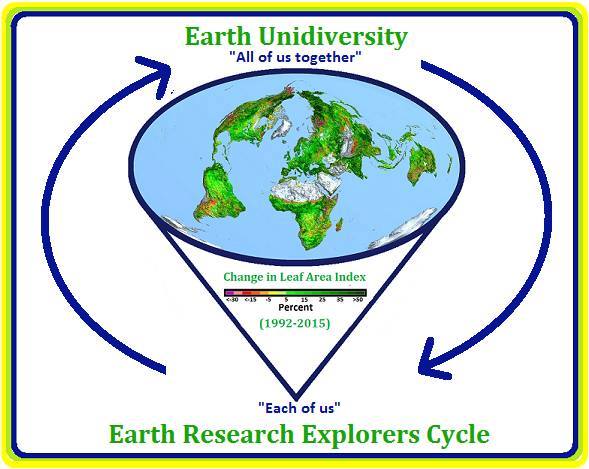
The We-Me Unidiversity Research Explorers Cycle is more Nature striving and Humanity striving with God approach as we strive to adapt towards desired future conditions on Earth.
Pollution is why we need (EEC) Ecological Equilibrium Compensation Investment Balancing and Holistic Restoration
“Focusing on real priorities” is a major problem on our planet.
“Focusing on real priorities” is a significant problem on our planet.
If they choose to accept this priority, we should have all the people involved in elections for the next four years, helping the starving people in Yemen and elsewhere before any election and politics. A similar condition should be met everywhere on Earth before everything else. Anyone else should be able to help them in this effort as well.
We must have an impact, needs, and input choices assessment to prioritize similar foundation needs by regions, areas, and individual people. This will determine our priorities of relative significance and importance.
The best option would be to offer tickets and significant ecological equilibrium compensation energy to all those involved in politics and anyone else who wants to help so they can go to Yemen or other areas in need on planet Earth. It would immediately take the negative energy sinks into positive energy sources. This would allow them to show their planning, leadership, personality, speaking, problem-solving, courage, bravery, commitment, discipline, debate, communication, and organization skills.
I am confused because it has been 45 years since I saw the first Care commercial showing starving, emaciated children on our planet. It is strange we still have a problem. It is time to focus on real priorities.
One of the first things we should do is a photo Ark census capturing every person on Earth to begin understanding current conditions at a finer and broader scale.
ADAPT
ADAPT (Area decision analysis for planning and tracking) is about the spatial representation of areas that need help, energy allocation, or ecological equilibrium compensation incentive. Some areas overlap and thus can be added with relative weighing for prioritization reasons. It also may be used for energy allocation investment reasons. In conjunction with the ecogeoscheduler, ADAPT may be used to plan your life at whatever epoch you desire, knowing that you can change plans anytime. It can be used to prepare for the future (as far as you want). Decisions are then made about resources, the timing of events, the needs of people, and solving many problems at once for one geographic ecogeoarea. Therefore, all aspects of planning may be accomplished with ADAPT. Likewise, all that has been completed may be used as a tracking tool or a way to understand all the historical events in the ecogeoarea. This allows us to use these historical events to learn and understand the ecosystem’s history. For example, if cutting slash is the chosen ecological niche role, the area selected determines how much is accomplished. Once accomplished, the area becomes a record of history or a disturbance history of an area. It also is about recording the restoration of an area as well. In the future, the period to return to the site may be determined from historical area records stacked on top of one another in perpetuity. From here, it is easy to write plans because it is easy to talk about what occurred in an area at the time, date, who, when, what, where, and any other notes or considerations for future interventions. The prospective areas selected will then have this historical data to plan. The area designated in the future will quickly understand the number of resources, people, equipment, and other considerations. One can write a cumulative totality plan about every treatment or restoration in these areas. This is essential when understanding the current condition and planning the adaptive transformation toward the desired future. Knowing the cumulative totality of the current and expected conditions, we may holistically prescribe advice to strive toward desired conditions adaptively. (Many of these ideas are an adaptive expansion of ideas I had about forest management and holistic integration of sustainable enduring methods at UVM School of Natural Resources in the 1990s and as a GIS forester in the early 2000s)
Call it whatever you want to call it.