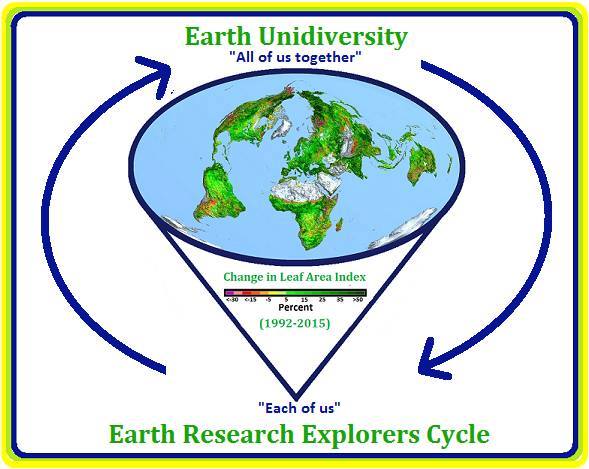
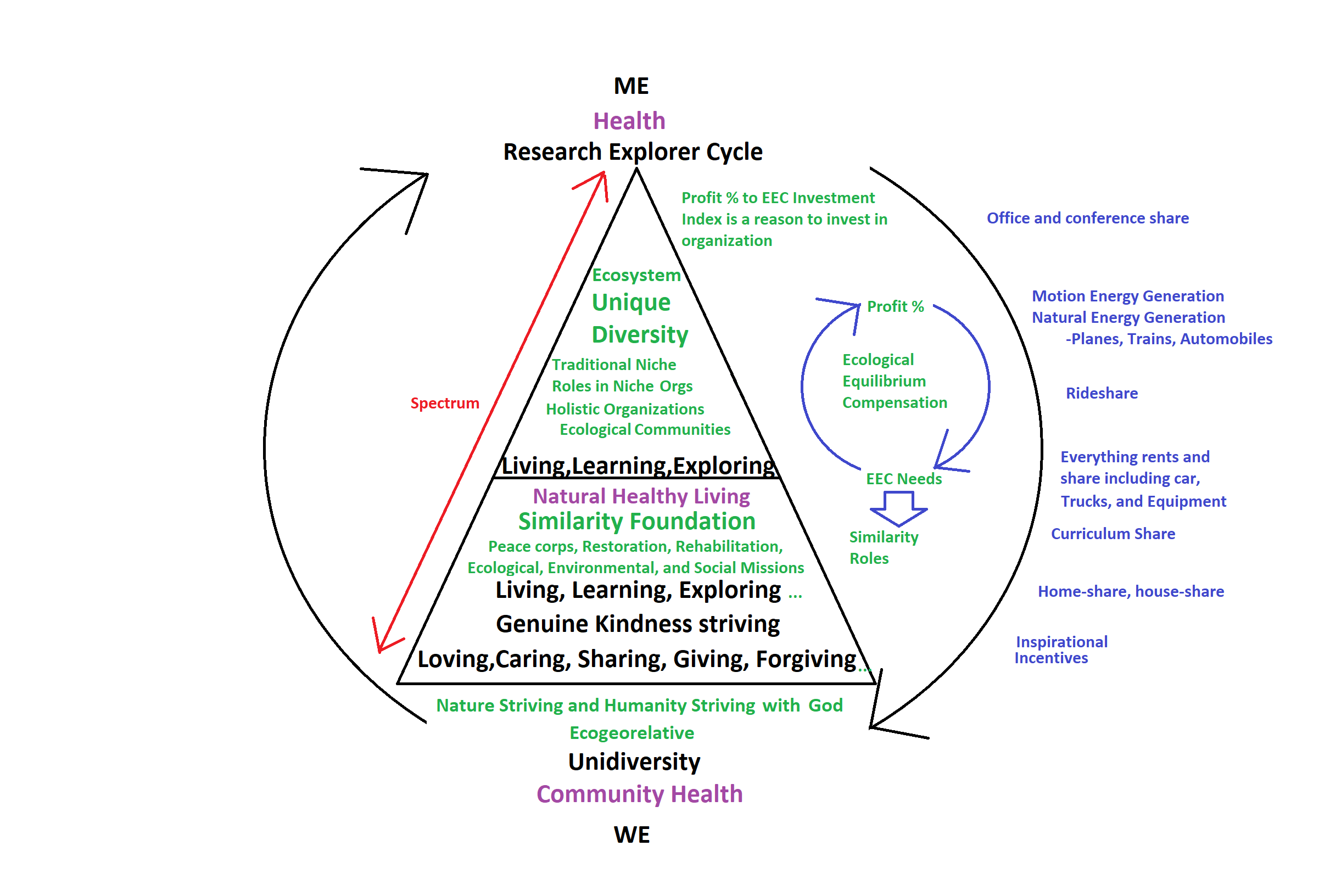
Many organizations, including non-profits and churches, have been trying to fund necessary missions and restorations themselves without any investment from deep-pocket corporations, billionaires, and businesses. This must change. For a while now, I have struggled to understand why those Care commercials and those like them are still trying to be funded by the poorest among us. We need to adapt and include the We-Me Unidiversity Research Explorers Cycle because the Unidiversity would seek incentives for investment for large niche organizations, businesses, and billionaires to fund these investments sooner rather than later. It works the same way as explained in the last paper. Because the relative importance and significance are high, there is a tremendous incentive for large niche organizations and billionaires to fund these important missions. Once these missions and restorations are funded, people want to invest in niche organizations and billionaire organizations that are making the original investments in missions and restorations like a cycle. Then, these organizations become popular investments from the masses and other organizations because of their great work. Churches and non-profits should have the chance to become profitable at what they do so they can invest in the niche organizations that invested in them as a cycle. It becomes a negative feedback loop (a great thing) in both directions. It works to end all the positive feedback loop situations on Earth, such as hunger, health conditions, environmental concerns, community concerns, and clean potable drinking water. Many of these communities are the most holistic on Earth, and when they need help, they should be at the top of the list of relative priorities.
Individual people with an inspiring life path plan should also be invested in. It does not matter if they are aspiring for a similar foundation role or a unique diversity role, as they both matter. Tuition is already compensated for in the similarity foundation. However, investment should be based on the need, relative importance, and significance of the person’s path, desired roles, and functions. This may also start a long-term relationship between the person and the investors. Recently, a great example of a student in need from UVM received investment from graduates of the school. Graduates may become mentors of students they fund as a cyclic relationship is formed, just like the We-Me Unidiversity Research Explorers Cycle.
The We-Me integrated devices, computers, and other devices will be used to prioritize needs relatively so that they will be indicated on the map of planet Earth. This will help churches and other niche organizations plan, determine priorities, and make lists. This function is like a cycle as we provide locational information, needs, scheduling, imagery, interesting observations, local awareness, newsworthy events, research needs, local events, history, mission events, volunteer events, deals, cautions, concerns, be aware, meeting places, conferences, house shares, home shares, office shares, nature values imagery, humanity values imagery, friend locations, weather be aware, rideshare, help needed, everything rents and shares, special areas, and special sites.
The We-Me Unidiversity Research Explorers Cycle goes beyond the adaptive stability of current markets, non-profits, and churches doing missions and rehabilitations. The We-Me Unidiversity Research Explorers Cycle enhances the adaptive natural stability (Ecology UVM 1993) of our planet, people, environment, communities, community health, health, economy, and markets.
Natural Earth Striving Recent Papers
Natural Earth Striving First Papers